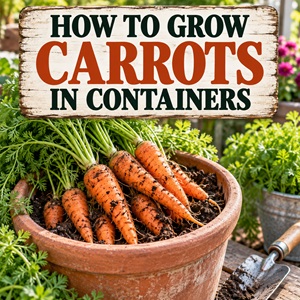
You don’t need a large vegetable garden to grow your own carrots. In fact, carrots are one of those vegetables that can be surprisingly easy to grow in containers.
This post may contain affiliate links.
If you have a sunny patio, balcony, deck, or even a small corner of your yard, you can grow a nice crop of fresh carrots in a pot.
Container gardening also gives you more control over the soil, which is especially helpful when growing root vegetables.
The key to growing good carrots in containers is choosing the right variety, using a deep enough container, and giving the roots loose, well-draining soil so they have room to develop.
Here’s everything you need to know about growing carrots in containers.
Why Grow Carrots in Containers?
Carrots are a great choice for container gardening because they don’t need a huge amount of space above ground. The part that needs room is the root growing underneath the soil.
Growing carrots in containers has several advantages:
- You can grow them even without a traditional garden.
- You have more control over the soil.
- Containers are easier to protect from some garden pests.
- You can move the containers if necessary.
- You can grow several varieties in a small space.
- Harvesting is easy because you don’t have to dig through a garden bed.
If you are already growing vegetables in containers, carrots make a great addition to your collection.
Choosing the Right Container for Carrots
The most important thing when choosing a container for carrots is depth.
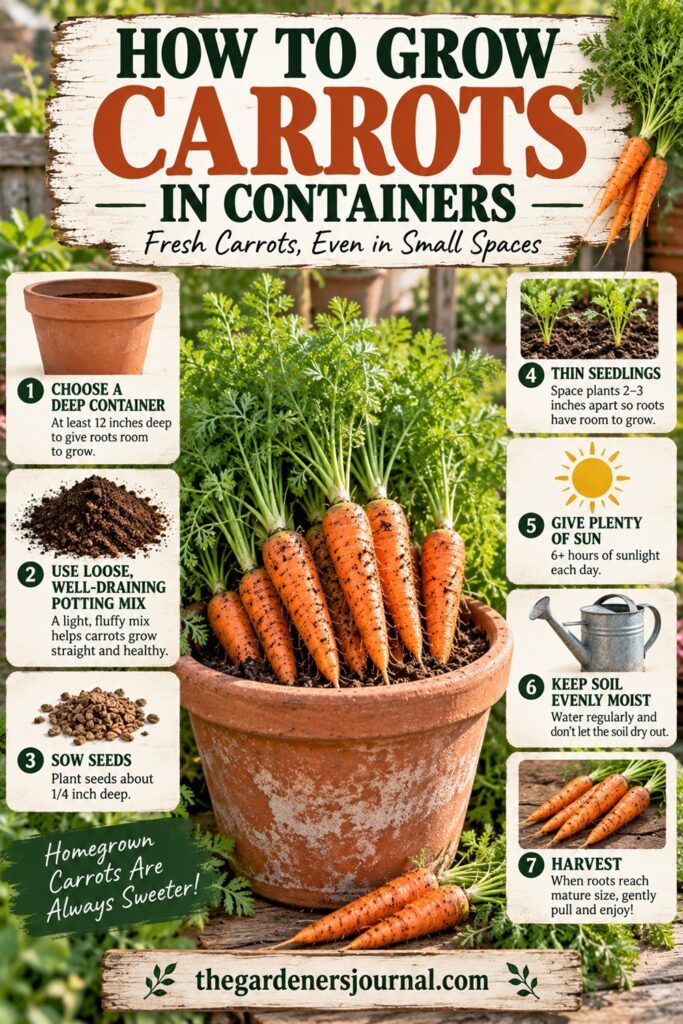
Carrots need enough room for their roots to grow downward, so choose a container that is at least 12 inches deep. If you want to grow longer varieties, a deeper container is even better.
Good choices include:
- Large pots
- Window boxes
- Half barrels
- Fabric grow bags
- Deep raised planters
- Five-gallon buckets with drainage holes
The width of the container is less important than its depth, although a wider container will obviously allow you to grow more carrots.
Make sure your container has adequate drainage holes. Carrots need consistent moisture, but soil that stays waterlogged can cause problems with root development.
The Best Carrot Varieties for Containers
Shorter and round varieties are generally the easiest carrots to grow in containers because they don’t require as much depth.
Good choices include:
- Little Finger
- Paris Market
- Thumbelina
- Chantenay
- Danvers
If you want to grow a traditional long carrot, simply choose a deeper container to accommodate the mature roots.
Best Soil for Growing Carrots in Containers
Soil is particularly important when growing carrots.
The roots need to be able to push easily through the soil. Heavy, compacted soil can result in short, crooked, or misshapen carrots.
Use a light, loose potting mix that drains well. You can mix in some compost to add nutrients, but avoid creating a soil mix that is too heavy.
A good container mix should be:
- Loose and fluffy
- Well-draining
- Rich in organic matter
- Free of large rocks and clumps
Avoid using ordinary garden soil by itself in containers. It can become compacted and make it difficult for carrot roots to grow properly.
Don’t Overdo the Fertilizer
Carrots don’t need heavily fertilized soil.
Too much nitrogen can encourage lots of leafy growth while giving you less impressive roots. A good-quality potting mix with some compost is usually enough to get them started.
How to Plant Carrots in Containers
Carrots are best grown directly from seed because their roots don’t transplant particularly well.
Step 1: Fill Your Container
Fill your container with loose potting mix, leaving about an inch of space at the top.
Remove any large pieces of bark, stones, or compacted material that could interfere with the roots.
Step 2: Plant the Seeds
Scatter carrot seeds over the surface of the soil.
Cover them lightly with about ¼ inch of fine soil.
Carrot seeds are tiny, so try not to bury them too deeply.
Step 3: Water Gently
Water the container carefully after planting.
A strong stream of water can wash the tiny seeds around or bury them too deeply. A watering can with a gentle rose attachment works well.
Keep the soil consistently moist while the seeds are germinating.
Step 4: Give Them Plenty of Sun
Place the container somewhere that receives about 6 hours of sunlight a day.
Carrots can tolerate some light shade, particularly in warmer weather, but plenty of sunlight will encourage healthy growth.
How to Thin Container-Grown Carrots
One of the most important steps in growing carrots is thinning the seedlings.
Once your seedlings emerge and begin growing, they will probably be too close together.
If carrots are crowded, their roots won’t have enough room to develop.
When the seedlings are a few inches tall, thin them so the remaining plants have enough space to grow.
Depending on the variety, aim for approximately 2–3 inches between plants.
Instead of pulling aggressively on the seedlings you want to keep, carefully snip unwanted seedlings at soil level with small scissors. This reduces the chance of disturbing the roots of neighboring carrots.
Watering Carrots in Containers
Container-grown carrots need consistent moisture.
Containers dry out more quickly than garden beds, especially during hot weather.
Check your containers regularly and water when the surface of the soil begins to dry.
The goal is to keep the soil evenly moist without keeping it soggy.
In hot weather, you may need to water more frequently.
A layer of light mulch can also help reduce moisture loss from the surface of the container.
Fertilizing Carrots
Carrots are not particularly heavy feeders.
If you started with nutrient-rich potting soil and added some compost, you may not need much additional fertilizer.
If your plants need feeding during the growing season, use a balanced vegetable fertilizer according to the package directions.
Avoid excessive nitrogen fertilizers, which can encourage leafy tops rather than healthy roots.
Common Problems When Growing Carrots in Containers
Container-grown carrots are relatively easy to care for, but a few problems can occur.
Crowded Roots
If carrots are planted too close together, the roots may remain small or become misshapen.
Thinning is one of the easiest ways to prevent this problem.
Compacted Soil
Hard or compacted soil can make it difficult for carrot roots to grow downward.
Use a loose potting mix and avoid walking on or compressing the soil in your containers.
Inconsistent Watering
Allowing the soil to become extremely dry and then soaking it can lead to uneven growth.
Try to keep the soil consistently moist throughout the growing season.
Too Much Nitrogen
Lots of green carrot tops don’t necessarily mean you’ll have big carrots underneath.
Avoid overfertilizing, particularly with high-nitrogen fertilizers.
When to Harvest Container-Grown Carrots
One of the fun things about growing carrots is pulling one from the soil to see what you’ve grown.
Most carrots can be harvested once they reach their expected mature size, although you can harvest them earlier if you prefer smaller, tender carrots.
Check the seed packet for the approximate days to maturity for your variety.
You can also gently move a little soil away from the top of the root to see how large the carrot has become.
When you’re ready to harvest, loosen the soil around the carrot and pull it gently from the container.
If the soil is dry and hard, water it first and allow the moisture to soften the soil.
Can You Grow Carrots All Season?
One of the advantages of container gardening is that you can plant carrots in succession.
Instead of planting your entire container at once, consider sowing a few seeds every couple of weeks during the appropriate growing season.
This can give you a more continuous supply of fresh carrots instead of having everything ready to harvest at the same time.
Carrots are also a good crop to include in a container garden alongside other vegetables.
If you’re building a small-space vegetable garden, you might also enjoy growing fresh greens in containers. Lettuce, spinach, kale, arugula, and other greens can fit nicely into a container garden.
For a little more vertical interest, growing peas in containers is another great option.
Peas can produce a surprisingly good harvest in a relatively small space and can be grown with a simple trellis or other support.
More Vegetables to Grow in Containers
Carrots are just the beginning. Once you have a few containers growing, you can create a surprisingly productive little vegetable garden.
Try adding:
- Cucumbers in containers — give them a trellis or other support to make the most of your space.
- Zucchini in containers — choose a compact bush variety and give it a large container.
- Tomatoes in containers — choose a container-friendly variety and give it plenty of sun and room for the roots.
You can even combine root vegetables, greens, herbs, and fruiting vegetables to create a productive container garden on a patio or small backyard.
Create Your Own Container Vegetable Garden
You don’t need acres of land to grow a meaningful amount of your own food.
A few well-chosen containers can give you fresh carrots, leafy greens, peas, cucumbers, zucchini, tomatoes, and herbs throughout the growing season.
And because you can control the soil and growing conditions, container gardening is a practical option for beginners as well as experienced gardeners.
Start with a few containers, choose vegetables you actually enjoy eating, and build from there. Before long, your patio or deck can become a little garden of its own.
Follow my container gardening board on Pinterest.