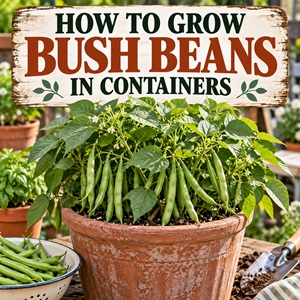
You don’t need a big vegetable garden to grow fresh green beans. Bush beans are one of the easiest vegetables to grow in containers, making them a great choice for patios, decks, balconies, and small backyard gardens.
This post may contain affiliate links.
Unlike pole beans, bush beans stay relatively compact and don’t need a trellis. With a sunny spot, a good-sized container, and a little regular watering, you can grow a surprisingly good harvest in a small space.
Here’s how to grow bush beans in containers.
Why Grow Bush Beans in Containers?
Bush beans are particularly well suited to container gardening because they have a compact growth habit and produce relatively quickly.
Most bush bean varieties mature in roughly 50–60 days, depending on the variety.
Container gardening also gives you more control over the soil and makes it easy to place your plants where they get the sunlight they need.
And there’s nothing quite like walking outside and picking fresh beans for dinner.
Choosing a Container for Bush Beans
Choose a container that’s large enough to give the plants room to develop a healthy root system.
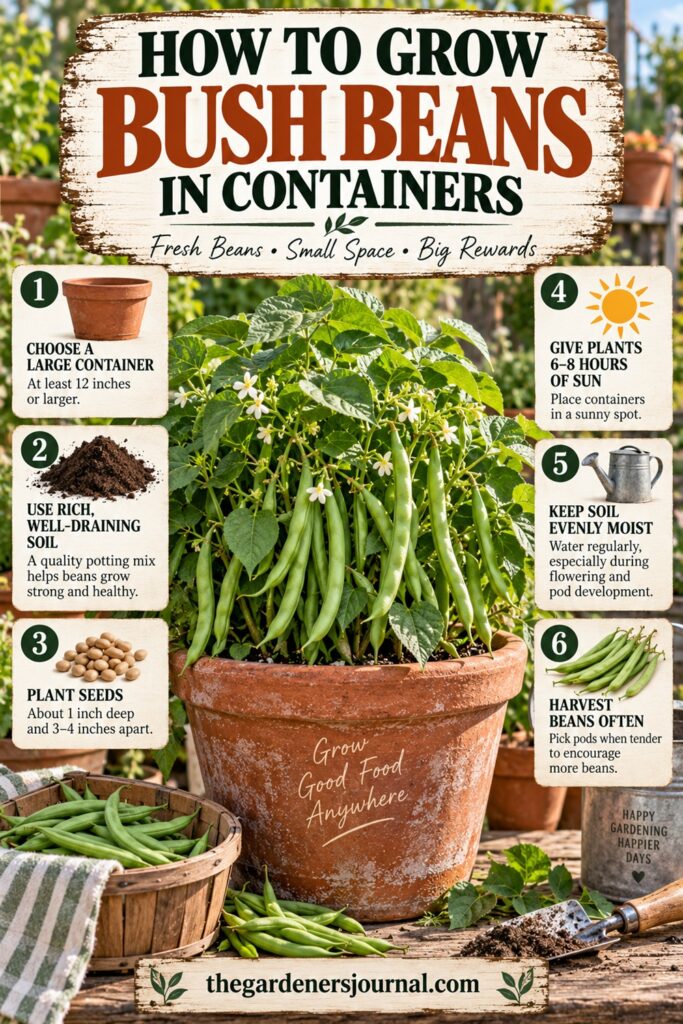
A 12-inch or larger container works well for bush beans, although a larger planter will hold more plants and won’t dry out as quickly.
You can grow bush beans in:
- Large pots
- Fabric grow bags
- Window boxes
- Raised planters
- Half barrels
- Large plastic containers
Whatever you choose, make sure it has good drainage holes. Container plants can suffer when excess water can’t drain away.
Choosing Bush Bean Varieties
There are lots of bush bean varieties to choose from, including green, yellow, and purple beans.
Some varieties worth looking for include:
- Blue Lake
- Provider
- Jade
- Tendercrop
- Slenderette
- Royal Burgundy
- Strike
The best variety for you will depend on your growing season and what type of beans you enjoy eating.
The Best Soil for Container Beans
Beans grow best in fertile, well-drained soil enriched with organic matter.
For containers, use a good-quality potting mix rather than heavy garden soil.
You want a mix that is:
- Loose
- Well-draining
- Moisture-retentive without becoming soggy
- Rich in organic matter
Beans don’t require heavy fertilization, so there’s no need to overload your container with fertilizer.
How to Plant Bush Beans in Containers
Bush beans are warm-season vegetables, so don’t rush them into cold soil. Wait until the soil has warmed to around 60°F or warmer before planting. Cold, wet soil can slow germination or cause seeds to rot.
1. Fill Your Container
Fill the container with your potting mix, leaving about an inch of space at the top.
Water the soil before planting if it is particularly dry.
2. Plant the Seeds
Plant bush bean seeds about 1 inch deep.
For container gardening, space the seeds approximately 3–4 inches apart so the plants have room to grow.
One of the nice things about beans is that you can sow the seeds directly into their container. There’s usually no reason to start them indoors.
3. Water Gently
Give the container a thorough but gentle watering after planting.
Keep the soil evenly moist while the seeds germinate.
Beans typically emerge within about 7–10 days when planted in warm soil.
How Much Sun Do Bush Beans Need?
Bush beans grow best in full sun.
Aim for at least 6–8 hours of direct sunlight each day if possible.
Place your container somewhere sunny, such as:
- A sunny patio
- A south-facing deck
- A sunny balcony
- Along a sunny fence
- Beside your vegetable garden
The more sunlight your plants receive, the better your chances of a good harvest.
Watering Bush Beans in Containers
This is one area where container gardening requires a little extra attention.
Containers dry out more quickly than garden soil, particularly during hot weather.
Check your plants regularly and water when the soil begins to dry. Keep the soil consistently moist, especially when the plants are flowering and developing pods.
Water stress during this stage can reduce both yield and pod quality.
At the same time, don’t keep the soil soggy. Good drainage is important because overly wet conditions can contribute to root problems.
Do Bush Beans Need a Trellis?
One of the reasons I like bush beans for containers is that they generally don’t need a trellis.
Bush varieties form relatively compact plants that produce their crop without climbing.
That’s different from pole beans, which need a support structure to climb.
If you’re working with limited space, bush beans can be much simpler to manage.
Do You Need to Fertilize Container Beans?
Bush beans aren’t heavy feeders, so don’t go overboard with fertilizer.
Start with a good-quality potting mix containing organic matter. If your plants show signs that they need additional nutrients during the growing season, use a fertilizer formulated for vegetables according to the package directions.
Too much fertilizer isn’t necessarily better.
Common Problems Growing Bush Beans in Containers
The Soil Dries Out Too Quickly
This is probably one of the most common challenges with container vegetables.
A small container can dry out surprisingly fast during hot weather.
Solution: Use a larger container, check the soil regularly, and add a light layer of mulch to help retain moisture.
Beans Aren’t Producing Many Pods
Insufficient sunlight, inconsistent watering, or other growing stresses can affect production.
Make sure your container gets plenty of sun and that you’re keeping the soil consistently moist.
Yellowing Leaves
Yellow leaves can have several causes, including watering problems, nutrient issues, or natural aging of older leaves.
Check the soil moisture and make sure the container drains properly before adding fertilizer.
Plants Are Crowded
Don’t try to squeeze too many plants into a small pot.
Giving your beans enough space for good air circulation and root development will make caring for them easier.
When to Harvest Bush Beans
This is the fun part.
Bush beans are best harvested when the pods are full-sized but still tender, before the seeds inside become large and the pods become tough.
Check your plants frequently once they start producing.
It’s best to pick beans every couple of days because regular harvesting encourages the plants to continue producing.
Use a pair of scissors or gently snap the pods from the plant, being careful not to damage the stems.
And don’t worry if you don’t get a huge harvest all at once. That’s actually one of the advantages of bush beans—you can keep picking fresh beans over several weeks.
Plant Bush Beans in Succession
Want to extend your harvest?
Instead of planting all your beans at once, consider planting another container every 2–3 weeks during your growing season.
Succession planting can give you fresh beans over a longer period rather than having one large harvest all at once.
This works particularly well when you have several containers available.
More Vegetables to Grow in Containers
Once you discover how easy it can be to grow bush beans in containers, you may find yourself looking for more vegetables to add to your container garden.
Try growing:
- Carrots for a root crop that doesn’t need much space above ground
- Peas for an early-season container crop
- Cucumbers for a productive summer crop
- Zucchini in a large container
- Tomatoes for a classic container vegetable
- Lettuce and other greens for quick harvests
You can create a surprisingly productive vegetable garden with nothing more than a sunny patio and a collection of containers.
Can You Grow Bush Beans in Containers?
Absolutely.
Bush beans are one of those vegetables that make container gardening feel much more worthwhile.
They don’t require a complicated setup, they grow quickly, and once they start producing, you can walk outside and pick fresh beans whenever you need them.
Choose a sunny location, use a good-sized container with loose soil, keep the plants watered, and harvest the beans regularly.
A few containers can give you a surprisingly productive little vegetable garden.
Follow my container gardening board on Pinterest.