There’s something about a cottage garden that feels completely different from a perfectly manicured flower bed.
This post may contain affiliate links.
Cottage gardens are a little relaxed, a little overflowing, and full of flowers that seem to tumble into one another.
You might have tall hollyhocks growing behind lavender, roses climbing nearby, and bees moving from one bloom to the next all summer long.
The best part is that you don’t need a huge garden to create that look. A few well-chosen cottage garden flowers can give even a small flower bed that old-fashioned, romantic feeling.
If you’re planning a cottage garden, here are 25+ beautiful flowers to consider adding to your garden.
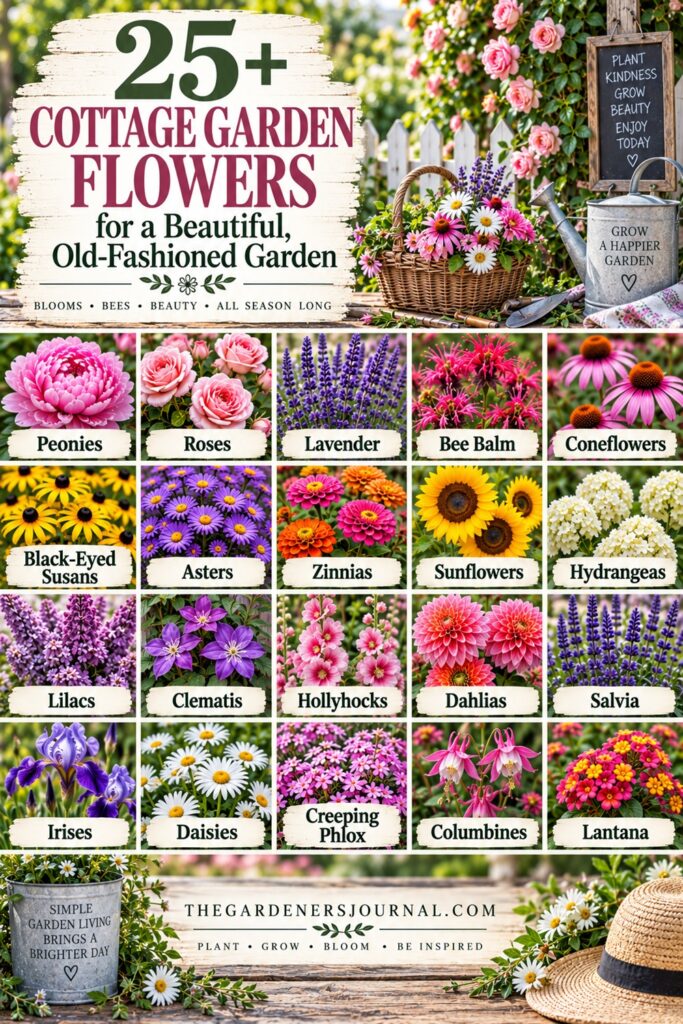
What Makes a Cottage Garden?
A traditional cottage garden usually combines flowers of different heights, colors, textures, and bloom times rather than planting everything in neat rows.
The goal isn’t necessarily perfection. Instead, you’re creating a garden that feels abundant and natural, with flowers spilling over paths and borders and different plants blooming throughout the growing season.
Many classic cottage garden plants are also excellent for pollinators. A mix of flowers that bloom from spring through fall can provide food for bees, butterflies, and hummingbirds throughout the season.
1. Peonies
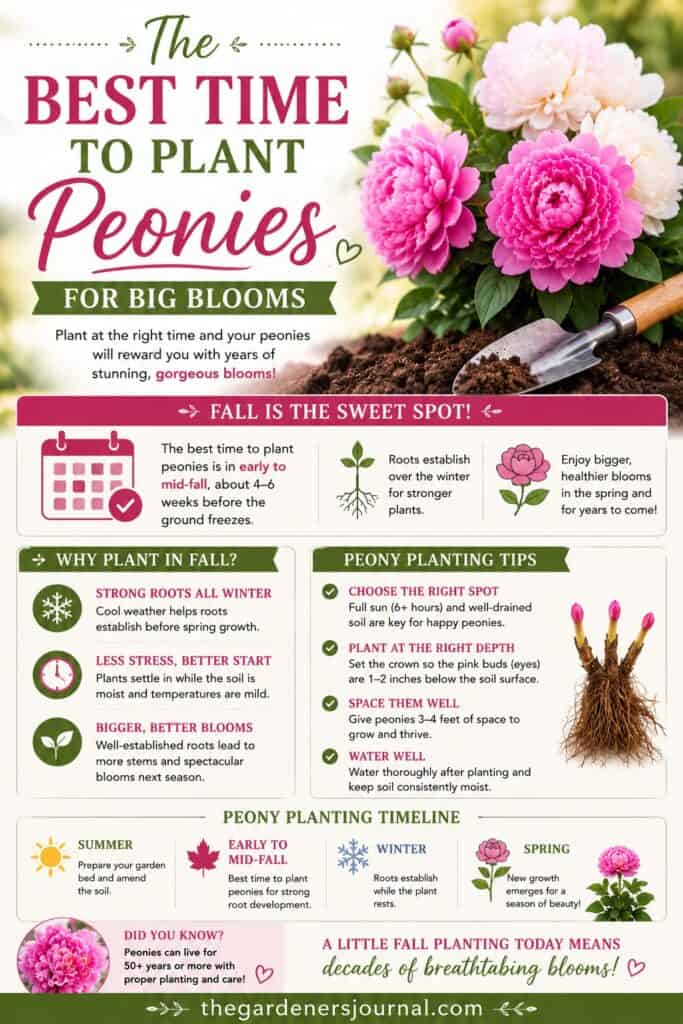
Peonies are one of my favorite choices for an old-fashioned cottage garden.
Their huge, romantic flowers make a statement in late spring, and established plants can live for decades with relatively little maintenance.
Try planting peonies toward the back or middle of a flower border where their lush foliage can provide structure after the flowers fade.
If you’re growing peonies, you’ll also want to know how and when to cut back peonies and what to plant with peonies.
The Best Time to Plant Peonies
2. Roses
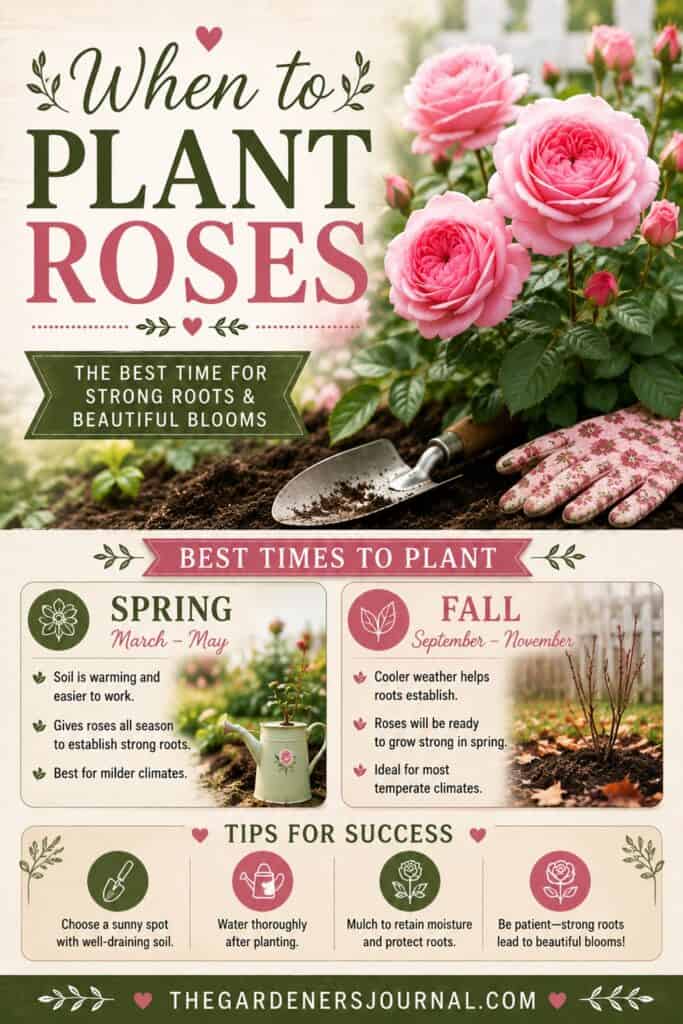
No cottage garden would feel complete without roses.
Old-fashioned roses, climbing roses, shrub roses, and English-style roses all work beautifully in this type of garden.
Let them grow alongside other flowers rather than giving each plant its own perfectly separated space.
Regular deadheading can also encourage many roses to continue blooming throughout the season. Here’s how to deadhead roses without damaging your plant.
3. Lavender
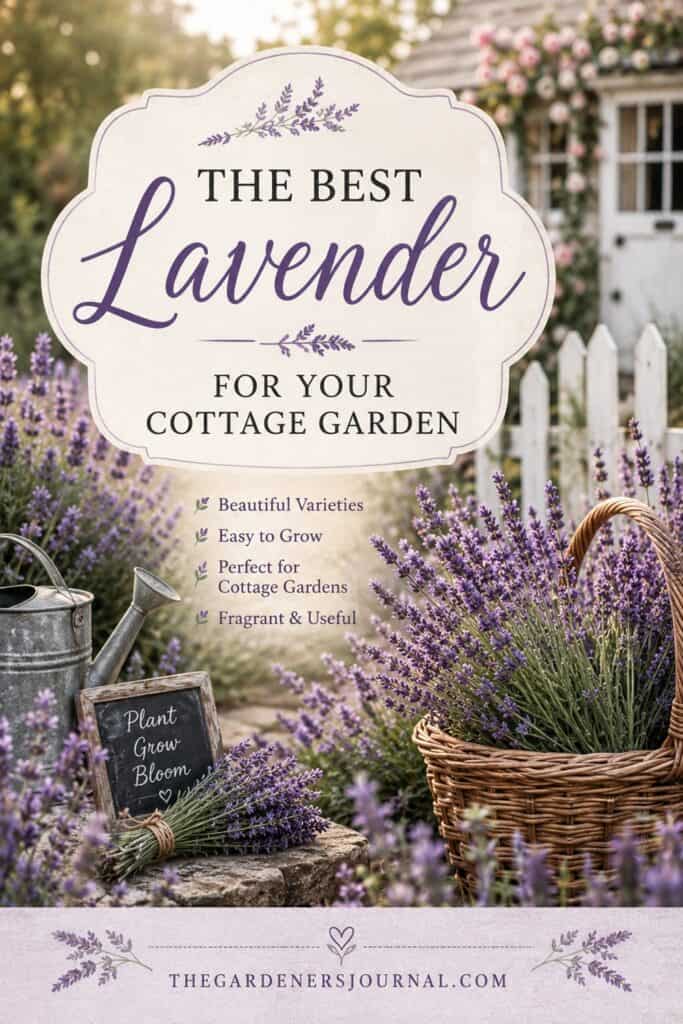
Lavender brings fragrance, silvery foliage, and beautiful purple flowers to a cottage garden.
It’s also an excellent plant for pollinators and works beautifully along paths, garden borders, and beside roses or peonies.
Lavender is especially useful if you enjoy a garden that can provide something beyond flowers. You can harvest the flowers for drying, tea, crafts, and homemade projects.
The Best Lavender Varieties for Your Cottage Garden
4. Bee Balm
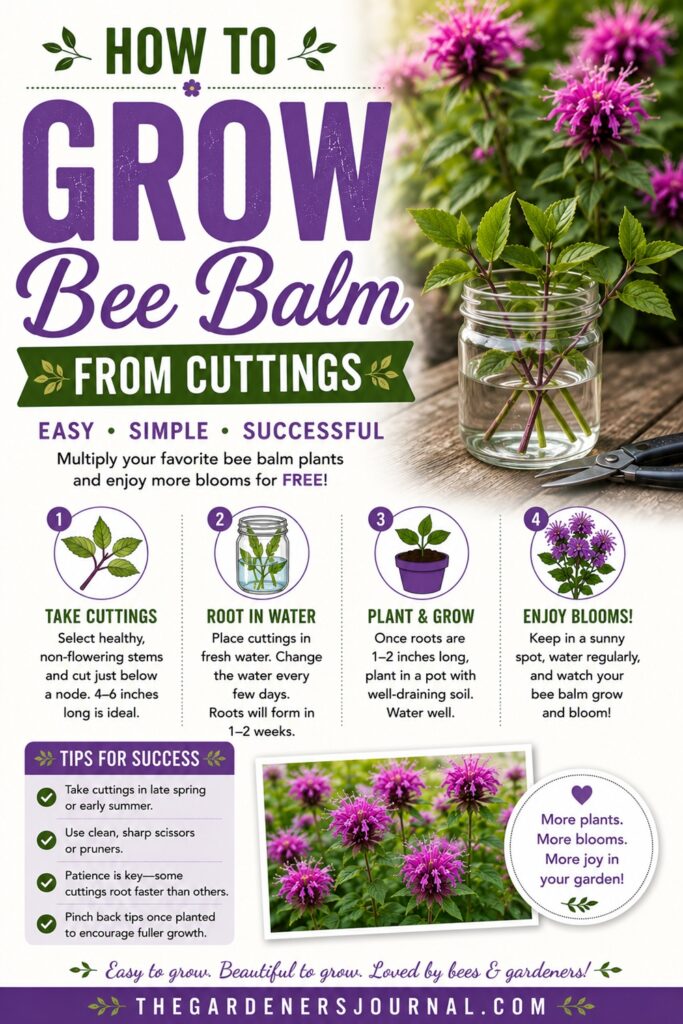
Bee balm is almost made for a cottage garden.
Its colorful flowers attract bees, butterflies, and hummingbirds, and the tall plants add a wonderful splash of color in the summer garden.
It’s also one of those plants that can look even better when allowed to mingle with other flowers instead of being planted by itself.
How to Grow Bee Balm from Cuttings
5. Coneflowers
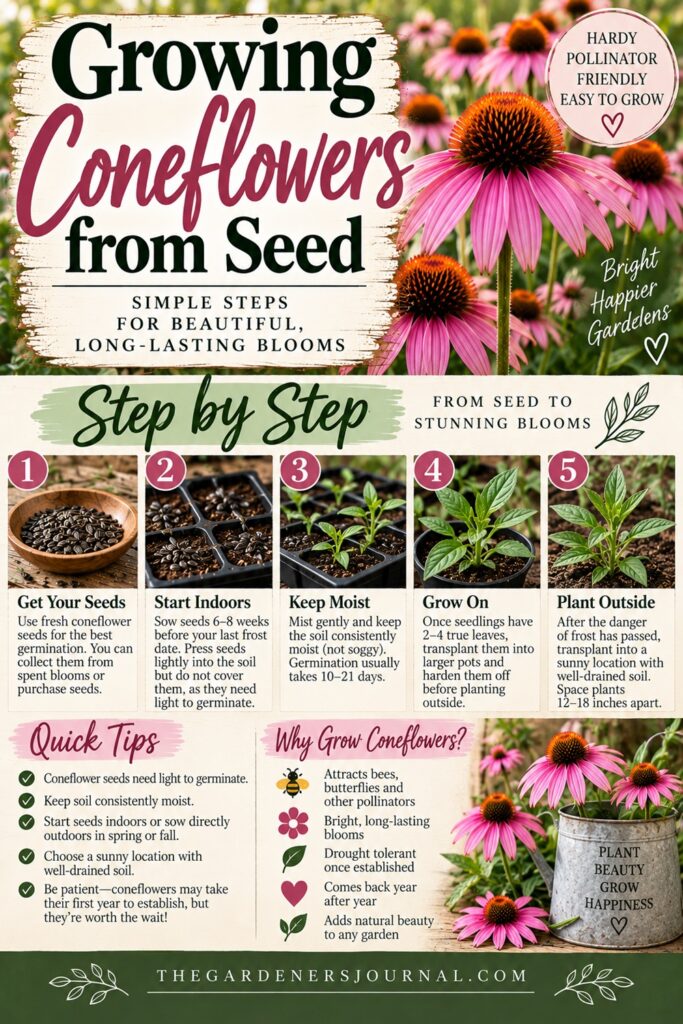
Coneflowers, or echinacea, are another excellent choice for a cottage garden.
They have a long bloom period, attract pollinators, and their seed heads can provide food for birds later in the season.
Their sturdy stems also make them useful toward the middle or back of a flower border.
How to Grow Coneflowers from Seed
6. Black-Eyed Susans
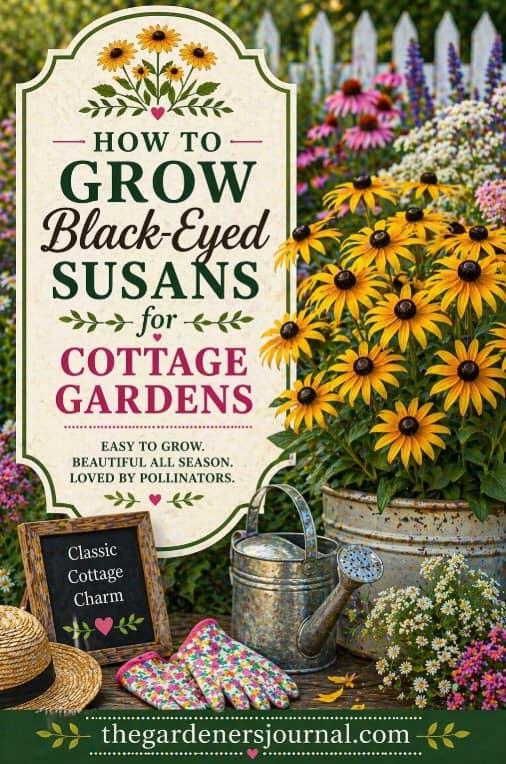
Black-eyed Susans bring cheerful yellow flowers to the garden during summer and are wonderfully easygoing plants.
They look especially pretty mixed with purple flowers such as coneflowers, lavender, salvia, and bee balm.
7. Asters
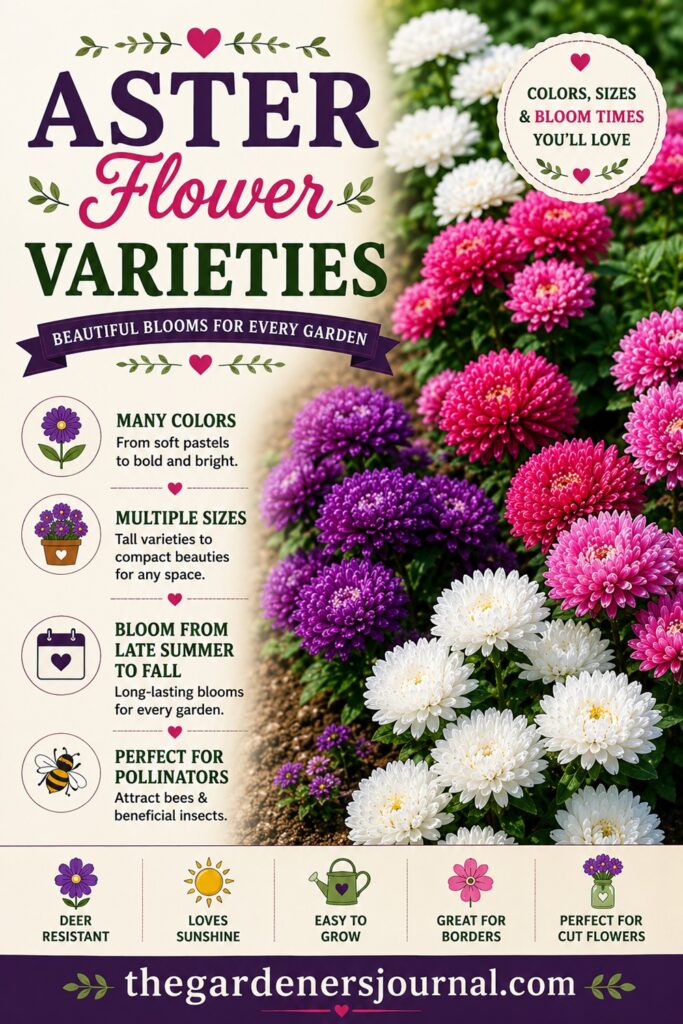
If you want your cottage garden to continue providing color into fall, don’t overlook asters.
Asters bloom in late summer and fall, providing an important source of nectar for pollinators when many other flowers are finished for the season.
Everything You Need to Know About Growing Asters
8. Zinnias
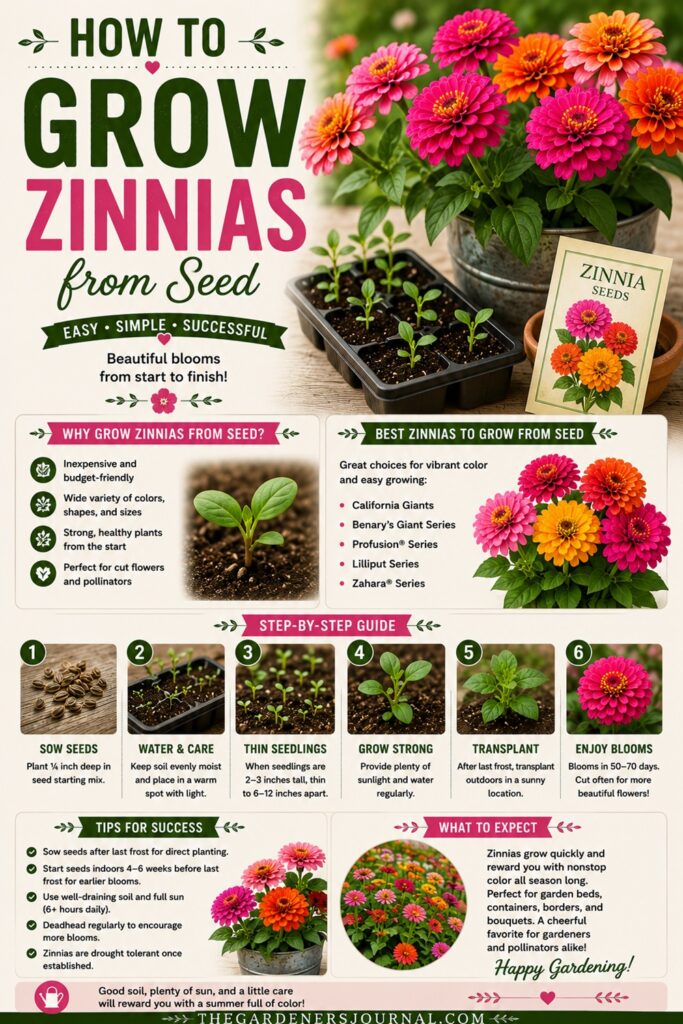
Zinnias are one of the easiest ways to add a lot of color to a cottage garden.
They come in an almost ridiculous range of colors and make excellent cut flowers. They’re also attractive to bees and butterflies.
For a fuller plant with more flowers, learn when to pinch zinnias for bigger, bushier plants.
9. Sunflowers
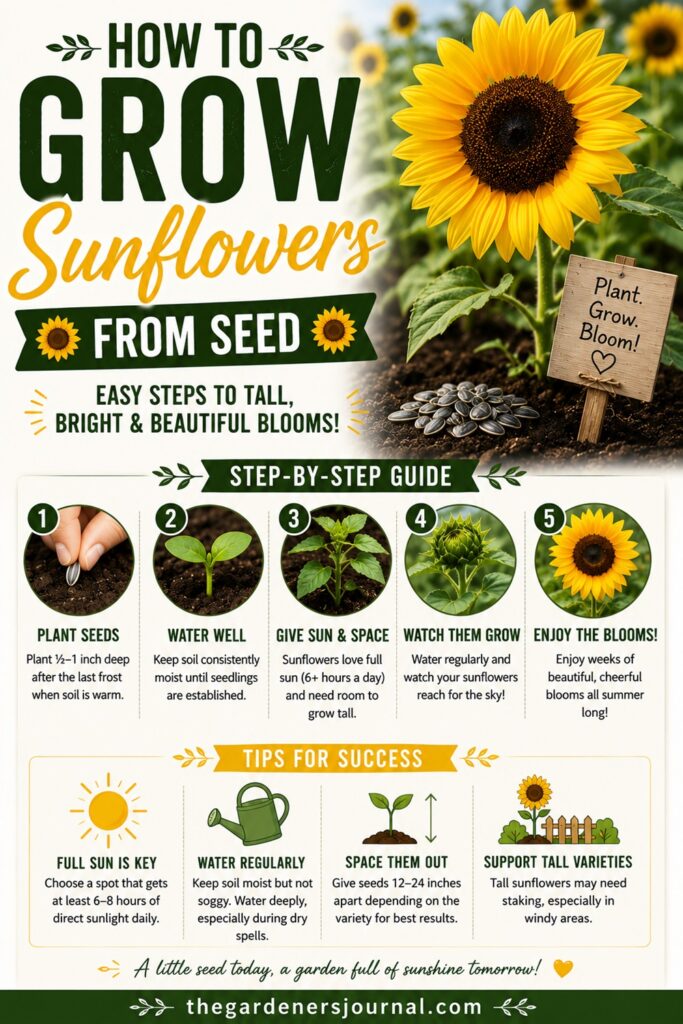
Sunflowers aren’t just for vegetable gardens.
Tall sunflowers tucked into the back of a cottage garden can provide height, color, and food for pollinators and birds.
Branching varieties are especially useful when you want flowers over a longer period.
Learn when to plant sunflowers for the best results.
10. Lilacs
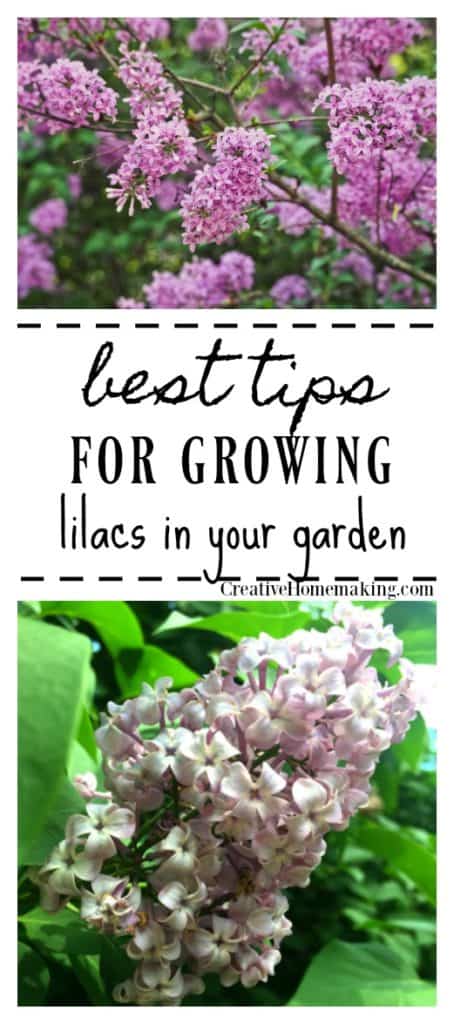
Lilacs are technically shrubs rather than annual or perennial flowers, but they belong in the cottage garden conversation.
Their old-fashioned clusters of fragrant flowers are hard to beat in spring.
Lilacs can also provide the taller structure that a cottage garden needs. Underplant them with peonies, creeping phlox, hostas, daylilies, or other lower-growing flowers.
Tips for Growing Lilacs for the Best Blooms
11. Hydrangeas
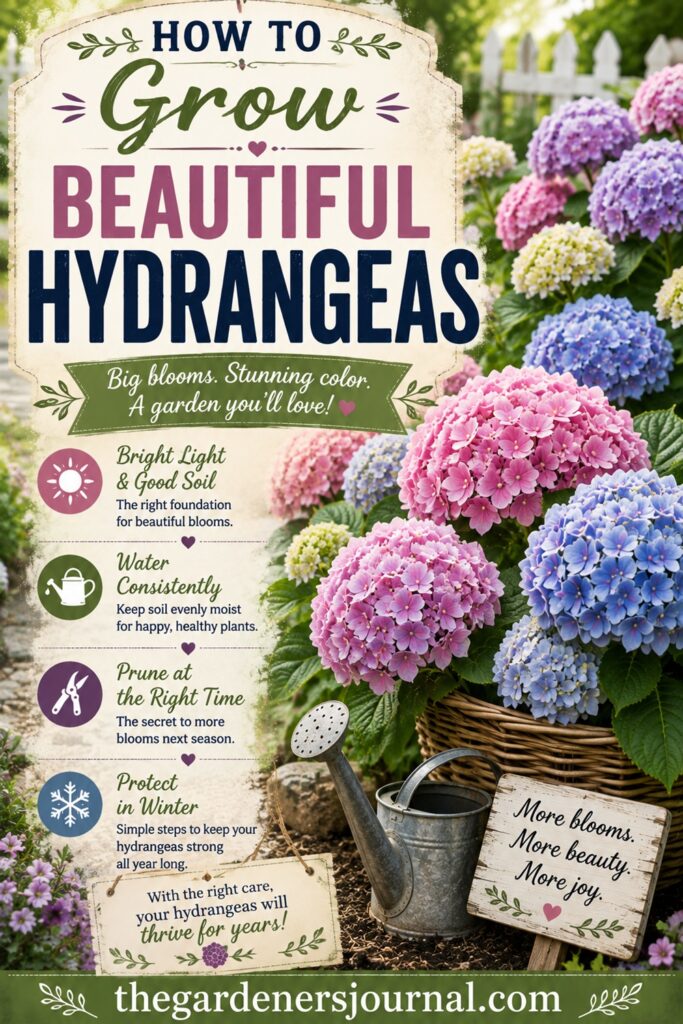
Hydrangeas bring large flower heads and beautiful structure to the garden.
They work particularly well along the edge of a cottage garden, where their large leaves and flowers can fill in spaces between smaller plants.
You can also choose varieties with different flower colors and forms depending on your garden.
How to Grow Beautiful Hydrangeas
12. Clematis
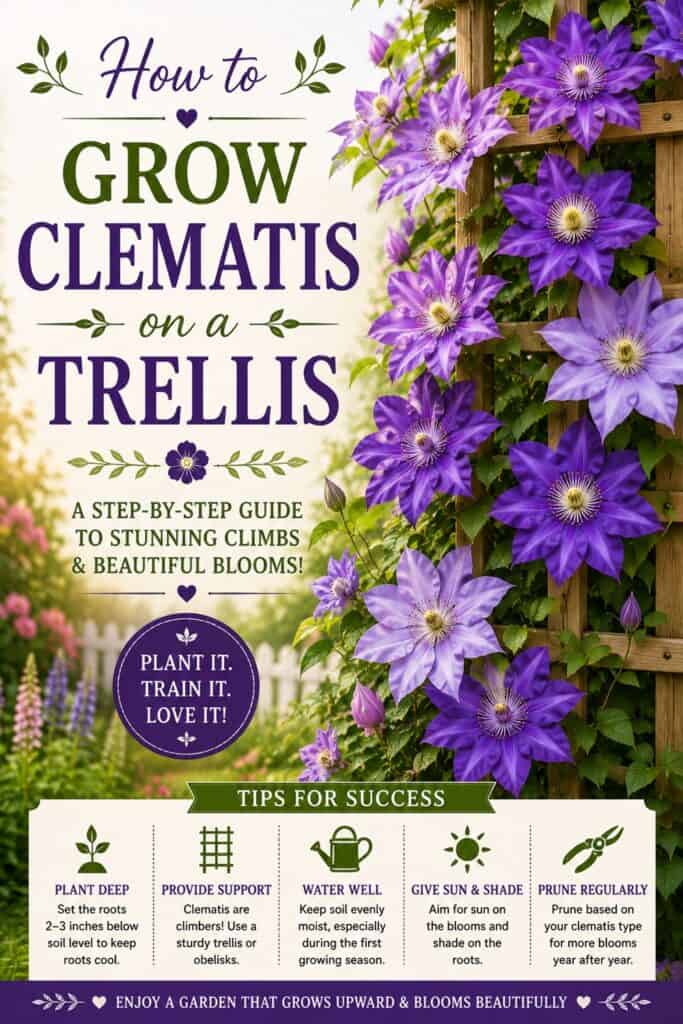
Clematis is perfect when you want to add vertical interest.
Grow it on a trellis, arbor, fence, or other garden structure and let it weave through the garden.
Clematis also pairs beautifully with roses, creating that classic romantic cottage-garden combination.
How to Grow Clematis on a Trellis
13. Creeping Phlox
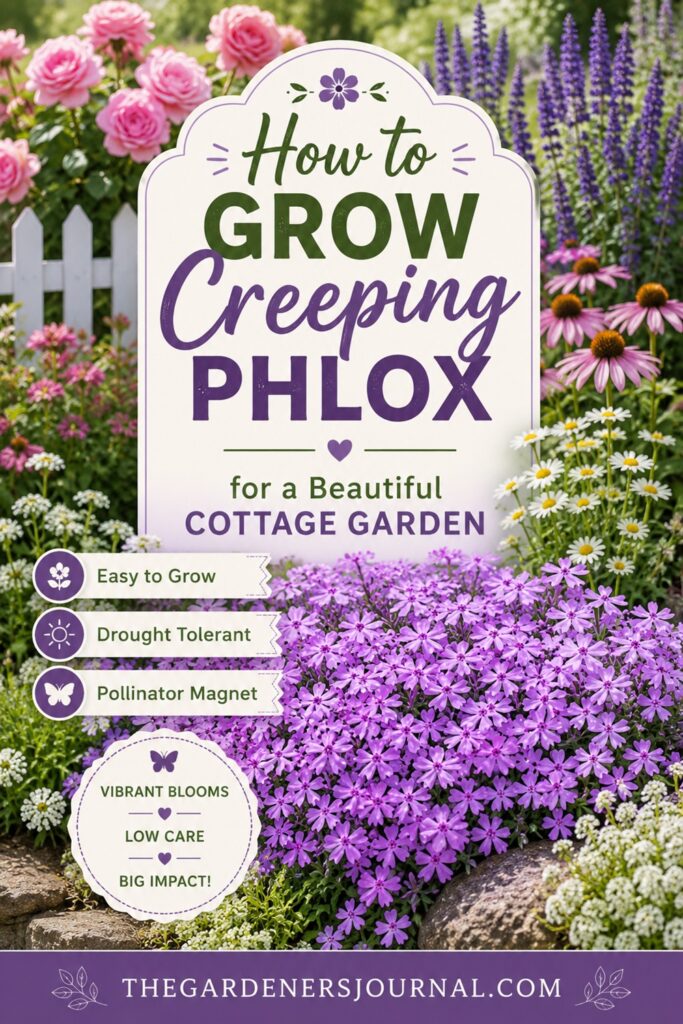
Creeping phlox is a wonderful choice for the front of a flower border.
Its low-growing habit makes it useful for softening the edges of paths and garden beds, while its spring flowers provide an early burst of color.
It’s also a great way to create the layered look that makes cottage gardens so appealing.
14. Salvia
Salvia adds vertical spikes of color without taking up much room.
It’s particularly useful when you want to add purple, blue, pink, or red flowers between larger plants.
Salvia is also popular with bees and hummingbirds, making it a useful addition to a pollinator-friendly cottage garden.
15. Dahlias
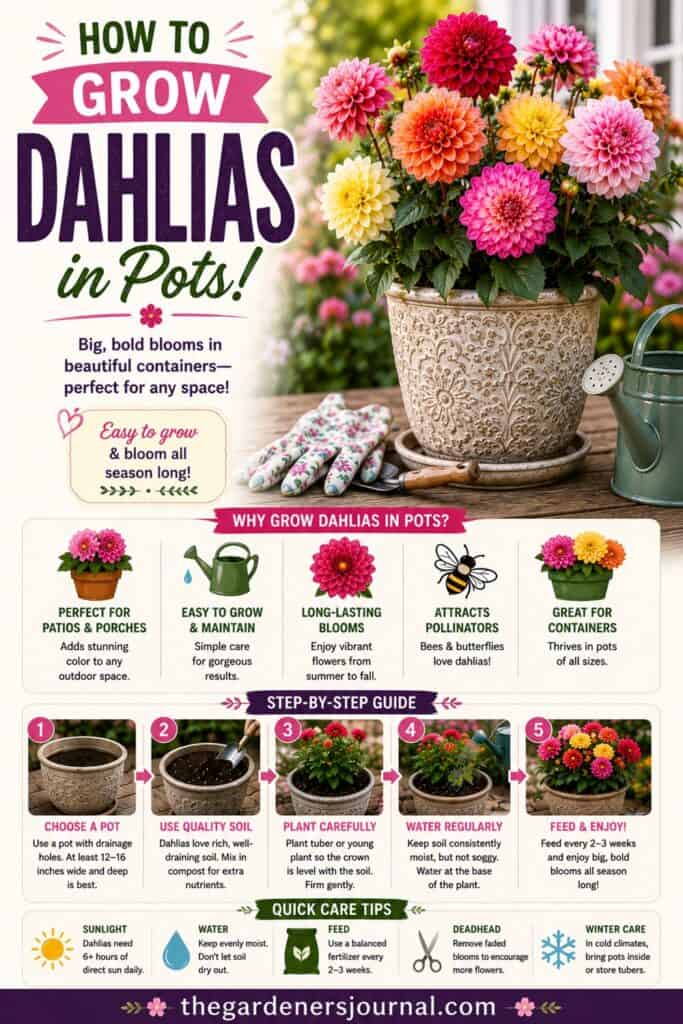
Dahlias bring some of the biggest and most dramatic flowers to the late-summer garden.
There are varieties ranging from small, simple blooms to enormous dinner-plate flowers, so you can choose something that fits almost any cottage garden.
They also make wonderful cut flowers.
16. Irises
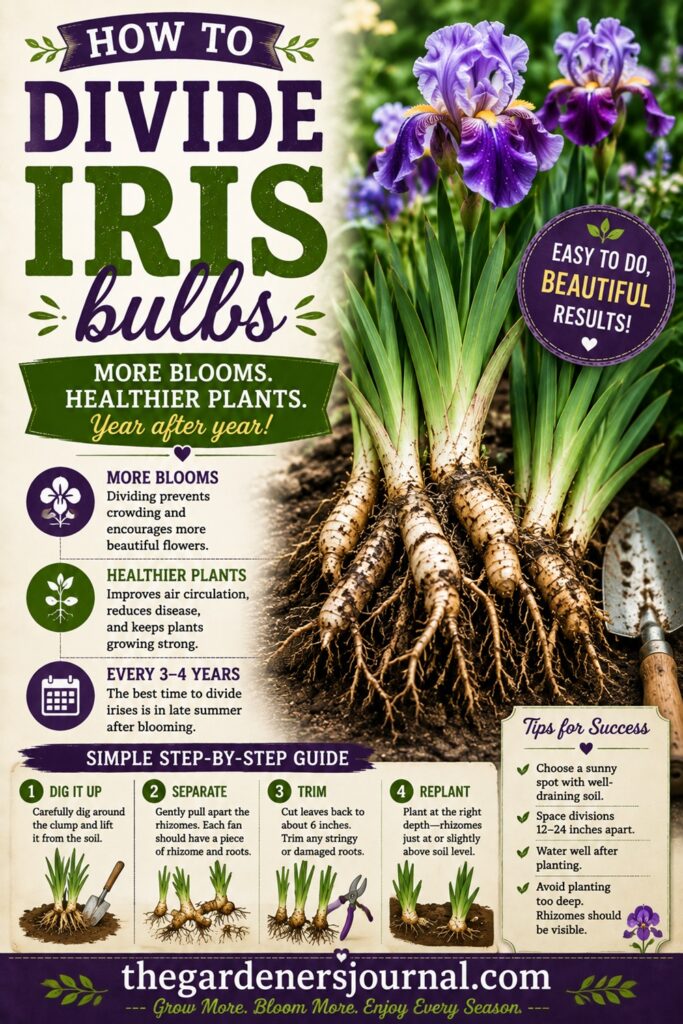
Irises are another old-fashioned garden favorite.
Their sword-like foliage adds structure even when the plants aren’t blooming, while the flowers bring beautiful color in spring and early summer.
Plant them in groups for a more natural cottage-garden effect.
17. Daylilies
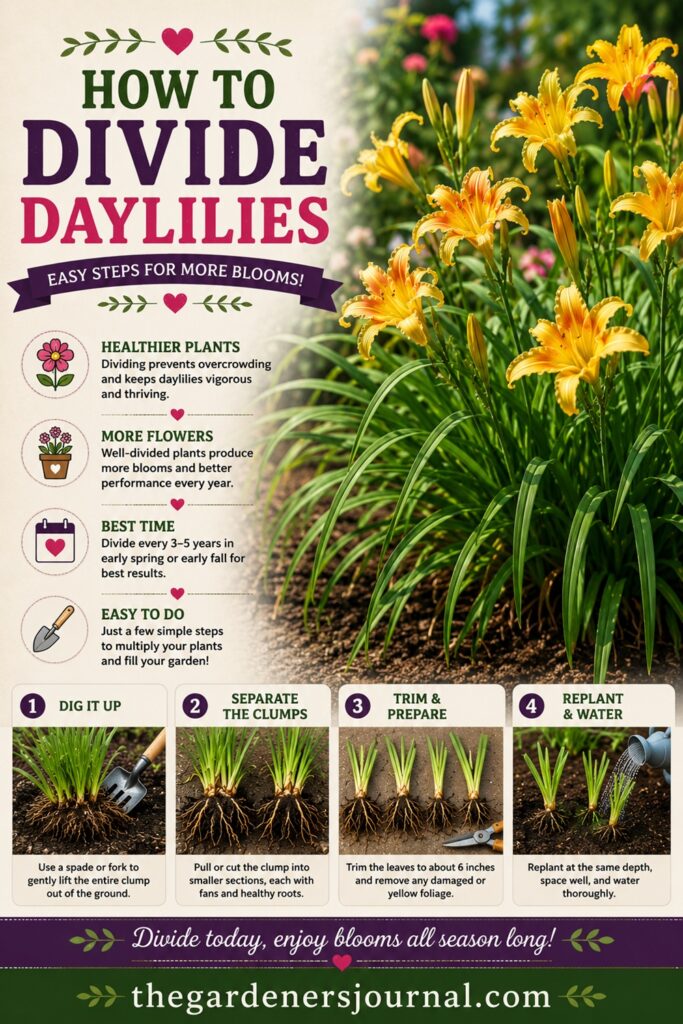
Daylilies are wonderfully forgiving plants and are ideal for gardeners who want beautiful flowers without constant maintenance.
Their arching foliage adds texture, and their flowers come in an enormous range of colors.
They also work well as transition plants between taller shrubs and shorter flowers.
18. Hollyhocks
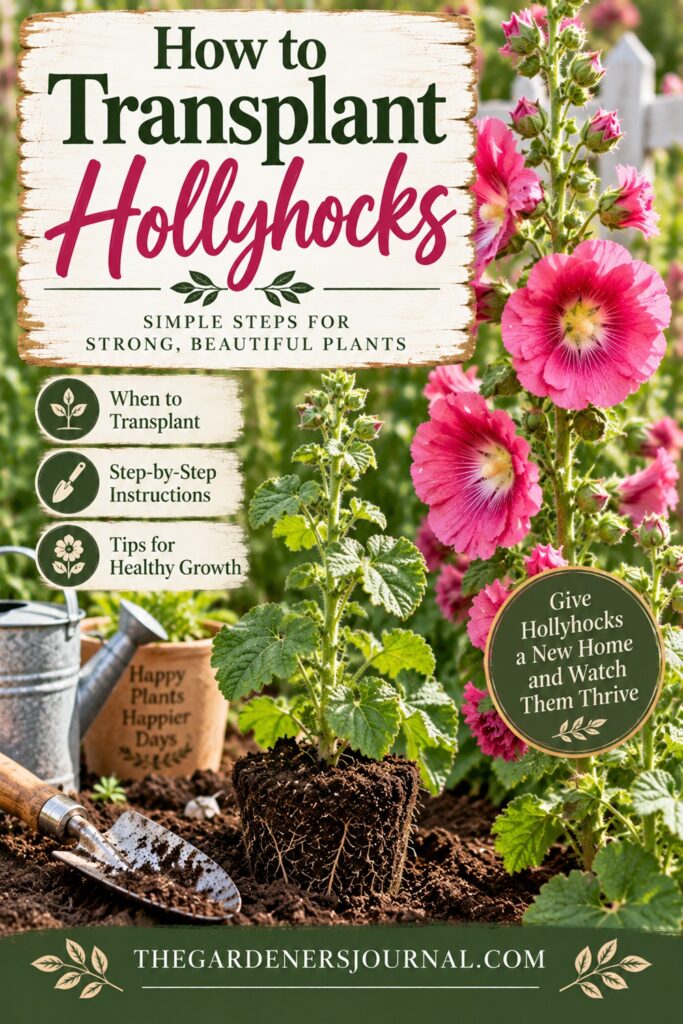
If you want the quintessential old-fashioned cottage garden look, plant hollyhocks.
Their tall flower stalks can rise above nearly everything else in the garden, making them perfect for the back of a border or along a fence.
Plant several colors together for that informal, overflowing look.
19. Columbines
Columbines are delicate-looking but surprisingly useful cottage garden flowers.
Their nodding flowers bring an almost wildflower-like quality to the garden and work beautifully beneath taller plants.
They’re particularly lovely planted among roses, peonies, and spring bulbs.
20. Geraniums
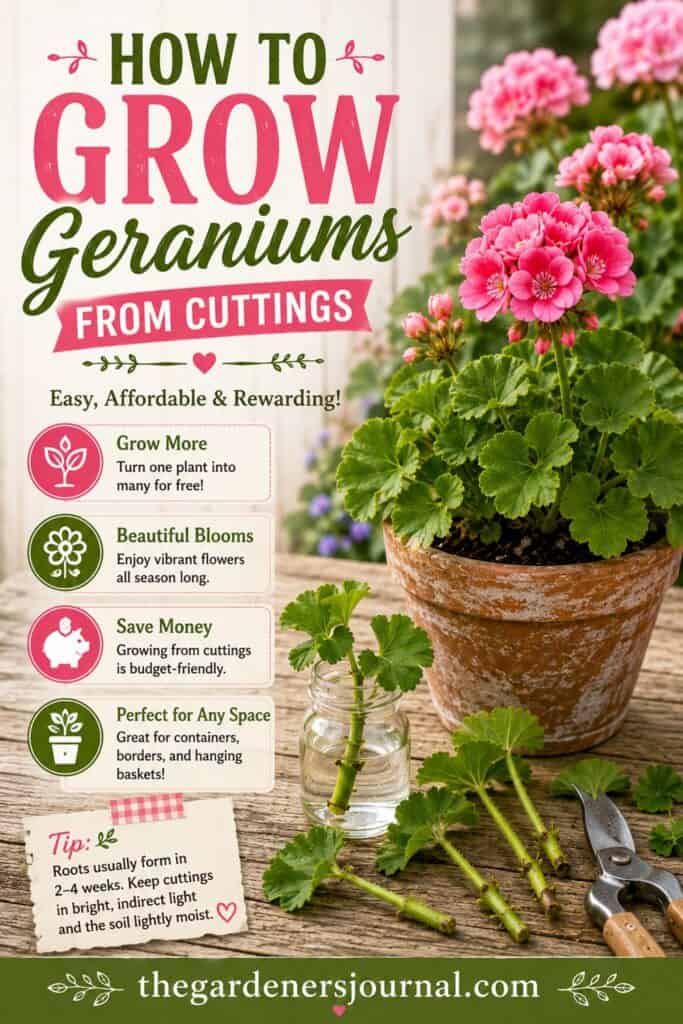
Hardy geraniums are excellent filler plants for cottage gardens.
They form soft mounds of foliage and flowers and can help connect taller plants together visually.
They’re also useful along pathways and at the front of flower borders.
How to Grow Geraniums from Cuttings
21. Verbena
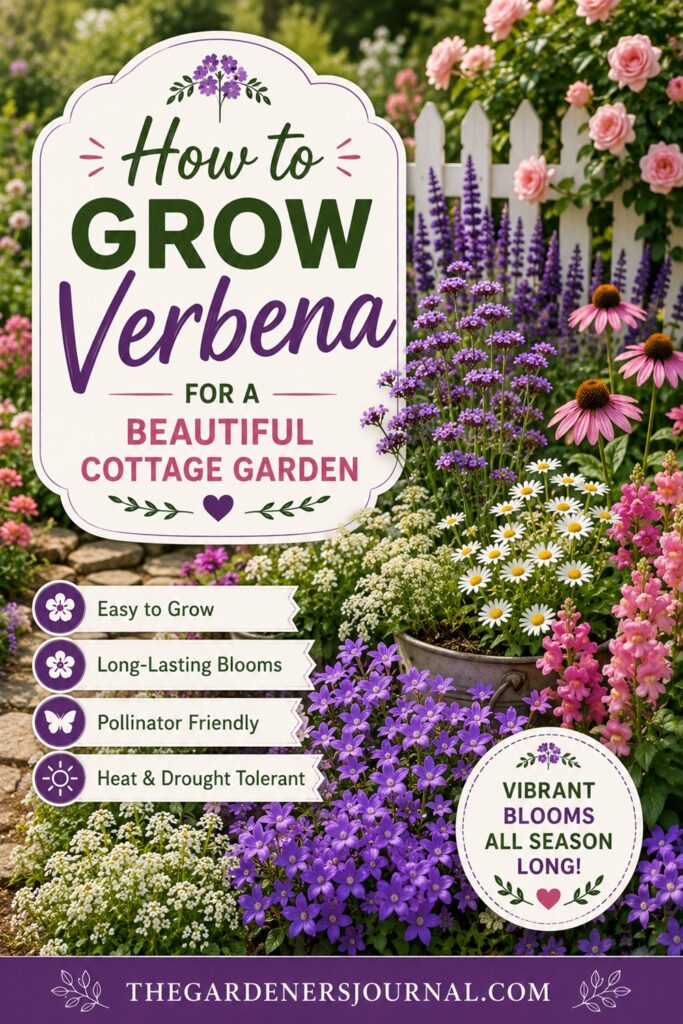
Verbena is another wonderful choice when you want flowers that attract pollinators while adding a loose, airy quality to the garden.
Tall varieties can work toward the back of a border, while shorter varieties can spill over paths and edges.
It’s one of those plants that makes a garden feel less formal.
Why Every Cottage Garden Needs Verbena
22. Lantana
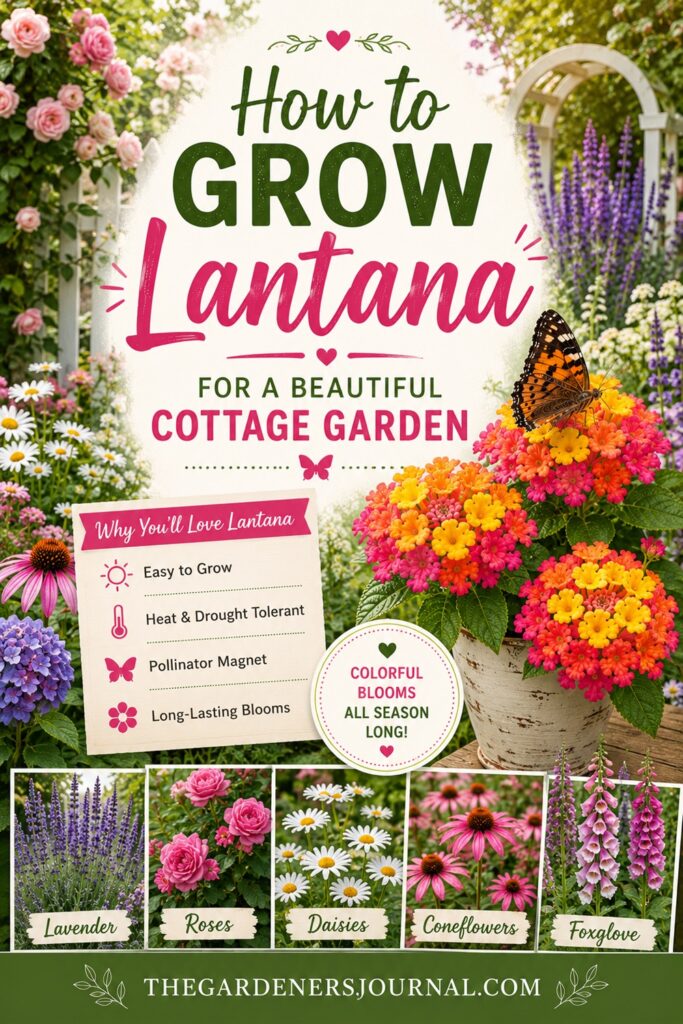
Lantana is especially useful in warmer climates and makes a beautiful addition to a cottage-style pollinator garden.
Its clusters of tiny flowers attract butterflies and other pollinators, and it can provide a long season of color.
Why Every Cottage Gardens Needs Lantana
23. Wisteria
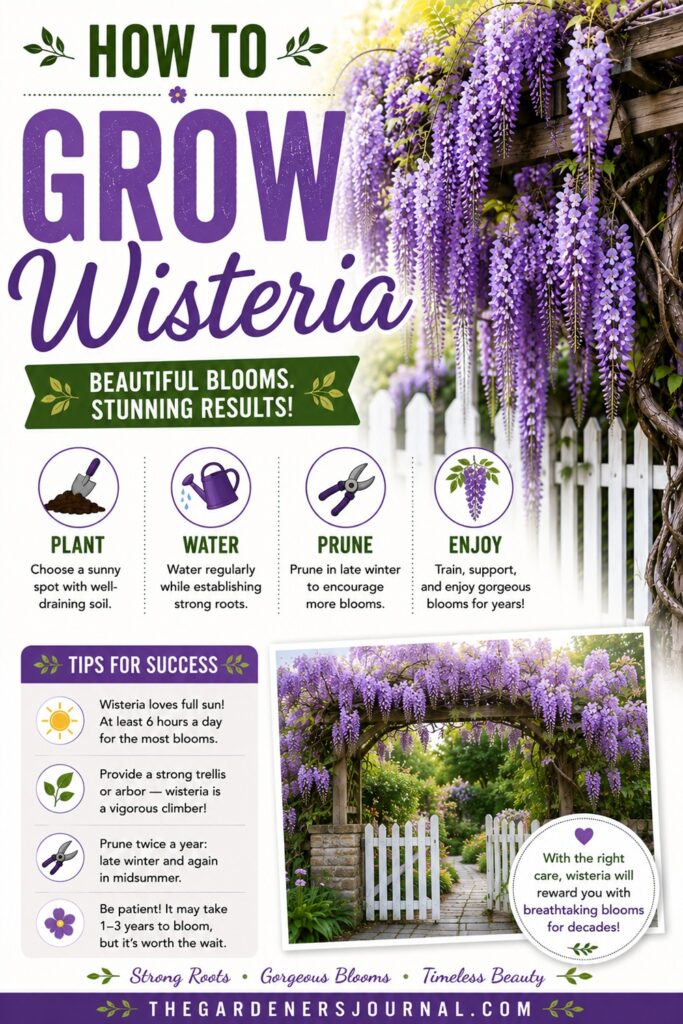
If you have the space for a vigorous vine, wisteria can create one of the most dramatic cottage garden features imaginable.
Train it over an arbor, pergola, or sturdy garden structure for cascading flowers and a romantic garden entrance.
Just make sure you choose a suitable variety for your growing conditions and give it a very strong support structure.
24. Daisies
Classic daisies are almost impossible to resist in an informal flower garden.
Their simple white flowers look beautiful mixed with almost anything and help balance some of the more elaborate flowers in a cottage garden.
They’re particularly pretty with roses, lavender, coneflowers, and salvias.
25. Sweet Peas
Sweet peas are another old-fashioned favorite worth making room for.
Their delicate flowers and fragrance make them perfect for growing along fences, trellises, or other supports.
And because they’re excellent cut flowers, you can bring some of that cottage garden beauty indoors.
26. Calendula
Calendula is an especially useful addition to a cottage or kitchen garden.
Its cheerful orange and yellow flowers brighten up the garden, and the edible flowers can also be harvested for homemade projects and teas.
It’s a nice choice when you want your garden to be both beautiful and useful.
27. Foxgloves
Foxgloves add height and drama with their tall flower spikes.
They’re especially beautiful planted toward the back of a cottage garden border with shorter flowers growing around their base.
Their vertical form also helps break up a garden that’s filled primarily with rounded plants.
Note: Foxglove is toxic if eaten, so take care if you have young children or pets.
How to Arrange Flowers in a Cottage Garden
The secret to a beautiful cottage garden isn’t necessarily choosing the “right” 25 flowers.
It’s how you combine them.
Instead of planting one long row of the same flower, think in layers.
Put tall flowers in the back
Use plants such as:
- Hollyhocks
- Sunflowers
- Foxgloves
- Delphiniums
- Wisteria
These provide height and help create the feeling of a full garden.
Add medium-height flowers
This is where plants like these work beautifully:
- Peonies
- Roses
- Bee balm
- Coneflowers
- Zinnias
- Dahlias
- Salvia
- Hydrangeas
Fill the front of the garden
Use lower-growing plants such as:
- Creeping phlox
- Hardy geraniums
- Columbines
- Lavender
- Daisies
This layered approach helps the garden feel abundant without becoming completely chaotic.
Plan for Flowers From Spring Through Fall
One of the biggest mistakes when planning a flower garden is choosing everything based on what looks good at the same time.
Instead, think about when each plant blooms.
Spring flowers such as lilacs, creeping phlox, irises, and peonies can get the season started.
Summer flowers such as roses, lavender, bee balm, coneflowers, zinnias, and sunflowers keep the garden going. Then asters and other late-season flowers can carry the garden into fall.
A pollinator garden benefits from the same approach because bees and butterflies need food throughout the growing season rather than one big flush of flowers.
Don’t Forget the Pollinators
One of the things I love most about a cottage garden is that it doesn’t have to be beautiful or useful.
It can be both.
Bee balm, lavender, coneflowers, asters, salvia, zinnias, sunflowers and other cottage garden favorites can provide valuable food for bees, butterflies, and hummingbirds.
Adding a variety of flower shapes and bloom times makes the garden even more useful to wildlife.
Create Your Own Cottage Garden
You don’t need all 25 of these flowers to create a cottage garden.
Start with a few that you love.
Maybe that’s a row of lavender along a walkway, a peony surrounded by old-fashioned roses, or a small pollinator garden filled with bee balm, coneflowers and asters.
Then add to it over time.
That’s really the beauty of a cottage garden. It doesn’t have to be finished. It can grow and change with you, one plant at a time.
And if you want to take the cottage garden idea a little further, start thinking about companion planting, pollinator plants, herbs, cutting flowers, and plants that bloom at different times of the year.
Before long, you’ll have a garden that feels like it has been growing there for generations.
Related Cottage Garden Guides
- Best Peonies and Flowers for a Pollinator Garden
- What to Plant With Lilacs for a Thriving Cottage Garden
- Everything You Need to Know About Growing Asters
- How to Deadhead Roses Without Damaging Your Plant
- How to Grow Geraniums From Cuttings
Follow my cottage garden flowers board on Pinterest.