Hollyhocks are one of those flowers that can instantly give a garden that old-fashioned cottage garden feeling.
This post may contain affiliate links.
Their tall flower stalks bring height and color to the garden, but because they can get quite tall, choosing the right plants to grow around them can make all the difference.
The best companion plants for hollyhocks help fill in the space around their tall stems, add different textures and bloom times, and create a garden that feels full and natural rather than overly planned.
If you’re growing hollyhocks in your cottage garden, here are some of my favorite flowers to plant alongside them.
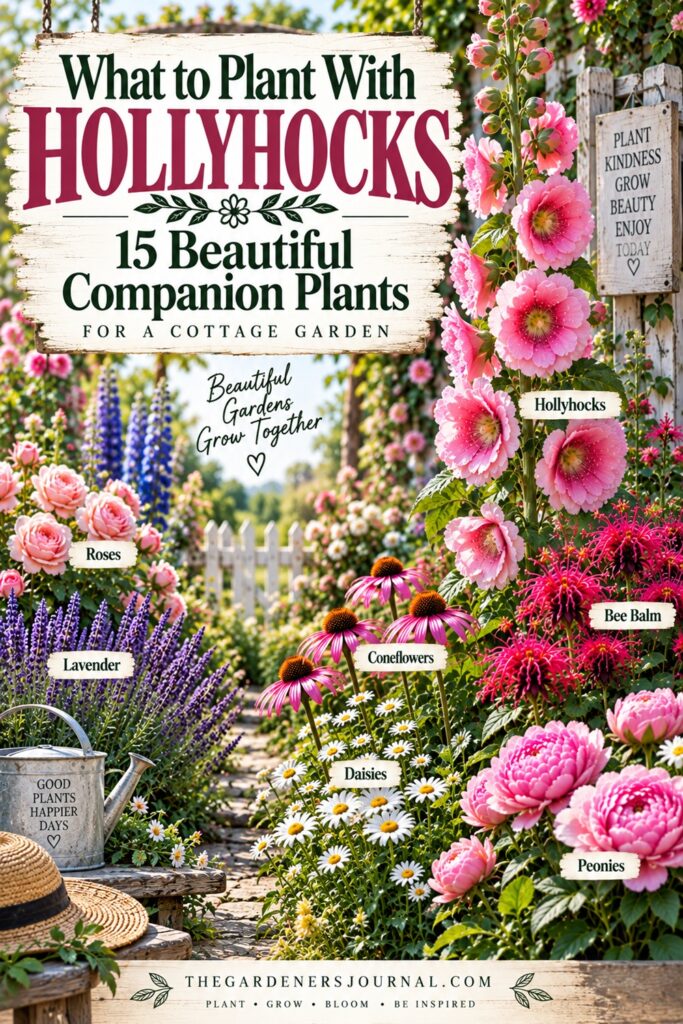
What Makes a Good Hollyhock Companion Plant?
Before choosing companion plants, think about what hollyhocks need.
Hollyhocks do best in a sunny location with well-drained soil. Because the plants can become quite tall, shorter flowers work well in front of them, while medium-height perennials can help fill the space around their base.
I also like choosing plants with different bloom times. That way, when one flower finishes blooming, another is getting started.
And since hollyhocks are such a classic cottage garden flower, I think the best companions are plants that have that same relaxed, slightly old-fashioned look.
1. Roses
Roses and hollyhocks are a beautiful combination for a cottage garden.
The tall, upright flower stalks of hollyhocks provide a nice contrast to the rounded shape of rose bushes. Choose roses in colors that complement your hollyhocks rather than trying to make everything match perfectly.
Roses also give you another opportunity to add fragrance and pollinator-friendly flowers to the garden.
How to Deadhead Roses Without Damaging Your Plant
2. Lavender
Lavender is one of my favorite plants for softening the front of a flower border.
Its low, mounding shape looks beautiful in front of tall hollyhocks, and the purple flowers provide a lovely contrast to pink, white, yellow, or burgundy hollyhocks.
Lavender also attracts bees and other pollinators, making this combination both beautiful and useful.
3. Peonies
Peonies and hollyhocks can work beautifully together because they provide different forms and bloom at different times.
Peonies produce their big, dramatic flowers earlier in the season, while hollyhocks can provide height and color later in the summer.
The lush foliage of peonies also helps fill the garden before the hollyhocks reach their full height.
4. Bee Balm
Bee balm is another excellent cottage garden companion for hollyhocks.
Its shaggy flowers bring a completely different shape to the flower bed, and bees, butterflies, and hummingbirds love it.
The bright colors of bee balm also look wonderful tucked among tall hollyhocks.
How to Grow Bee Balm From Cuttings
5. Coneflowers
Coneflowers are one of those flowers that seem to belong in every cottage garden.
Their sturdy stems and daisy-like flowers provide a nice contrast to the tall spires of hollyhocks. They also bloom for a long time and are excellent plants for pollinators.
A combination of hollyhocks, coneflowers, and bee balm can create a wonderfully colorful summer flower bed.
6. Black-Eyed Susans
Black-eyed Susans bring cheerful yellow flowers to a cottage garden and look especially pretty planted near pink or burgundy hollyhocks.
Their rounded flower heads also contrast nicely with the tall vertical shape of hollyhocks.
They are easygoing plants that can help fill in the middle of a flower border.
7. Salvia
Salvia is another great choice when you want to add vertical flower spikes without competing directly with the height of your hollyhocks.
The purple or blue flowers provide a beautiful color contrast, and salvia is also attractive to bees and hummingbirds.
Best Peonies and Flowers for a Pollinator Garden includes several other pollinator-friendly flowers that work beautifully in a cottage garden.
8. Catmint
Catmint makes an excellent plant for the front of a flower border.
Its soft gray-green foliage and lavender-blue flowers create a nice transition between taller hollyhocks and the edge of your garden.
It’s also a good choice when you want that slightly informal, overflowing cottage garden look.
9. Foxgloves
If you really want to embrace the old-fashioned cottage garden look, plant foxgloves with your hollyhocks.
Both plants provide tall flower spikes, so I wouldn’t necessarily put them directly beside each other. Instead, stagger them throughout the garden so they create layers of height.
One important note: foxgloves are toxic if eaten, so use care around children and pets.
10. Delphiniums
Delphiniums are another classic cottage garden flower with tall flower spikes.
Blue and purple delphiniums look especially beautiful beside pink, white, or burgundy hollyhocks.
Because both plants can become quite tall, place them toward the back of the garden and use shorter flowers in front.
11. Daisies
Simple white daisies are one of my favorite ways to lighten up a colorful flower bed.
They look beautiful beneath or in front of taller hollyhocks and help keep the garden from becoming too visually busy.
The combination of white daisies with pink hollyhocks is especially pretty.
12. Creeping Phlox
Creeping phlox is perfect for the front edge of a cottage garden.
Its low-growing habit gives you a layer of flowers at ground level while the hollyhocks provide height behind it.
This is exactly the kind of layering that makes a cottage garden feel full without everything competing for attention.
How to Grow Creeping Phlox for a Beautiful Cottage Garden
13. Asters
Asters are especially useful if you want your flower garden to continue looking beautiful late into the season.
They bloom later than many of the classic cottage garden flowers, helping provide color after some of the summer flowers have finished.
Purple asters also look lovely beside pink, white, and yellow flowers.
Popular Aster Varieties for Cottage Gardens
14. Zinnias
Zinnias are cheerful, colorful, and wonderfully easy to grow from seed.
Plant shorter varieties toward the front of the garden and taller varieties around your hollyhocks to create layers of color.
They also make excellent cut flowers and attract bees and butterflies.
When to Pinch Zinnias for Bigger, Bushier Plants
15. Lavender Cotton and Other Silver-Foliage Plants
Don’t overlook plants with interesting foliage when planning your hollyhock companions.
Silver and gray-green foliage can provide a visual break between all those colorful flowers. Lavender is an obvious choice, but other silvery plants can work beautifully too.
This is especially useful if you’re growing brightly colored hollyhocks and don’t want the flower bed to feel overwhelming.
How to Arrange Hollyhocks With Companion Plants
Because hollyhocks are tall, layering is the key.
Put your hollyhocks toward the back of the garden bed or along a fence where their tall stems can rise above the other plants.
Then place medium-height flowers such as:
- Bee balm
- Coneflowers
- Black-eyed Susans
- Salvia
- Peonies
- Zinnias
in front of them.
Finally, use shorter plants such as:
- Lavender
- Catmint
- Creeping phlox
- Daisies
around the front edges.
This gives you several different levels of flowers instead of one wall of tall plants.
Think About Bloom Time, Too
One of the easiest ways to create a garden that looks good for months is to choose plants that bloom at different times.
Peonies can provide early-season color, followed by roses, lavender, bee balm, coneflowers, and hollyhocks during summer. Then asters and other late-season flowers can keep the garden going into fall.
That staggered bloom time is also helpful for pollinators. A garden with flowers available throughout the season provides a much more reliable food source than one where everything blooms at once.
Create a Cottage Garden Full of Layers
Hollyhocks don’t need to stand alone in the garden.
Surrounding them with roses, lavender, peonies, bee balm, coneflowers, daisies, salvia, and other cottage garden favorites can make the entire flower bed feel more abundant and natural.
And you don’t have to plant everything at once. Start with a few combinations you love and add to the garden over time.
That’s one of the things I love about cottage gardening. The garden doesn’t have to be finished to be beautiful.
More Cottage Garden Flowers to Grow
If you’re building a cottage garden, you might also enjoy:
- 25+ Cottage Garden Flowers for a Beautiful, Old-Fashioned Garden
- Best Peonies and Flowers for a Pollinator Garden
- What to Plant With Lilacs for a Thriving Cottage Garden
- Best Companion Plants for Clematis
- Popular Aster Varieties for Cottage Gardens
- How to Grow Creeping Phlox for a Stunning Cottage Garden
Follow my cottage garden flowers board on Pinterest.