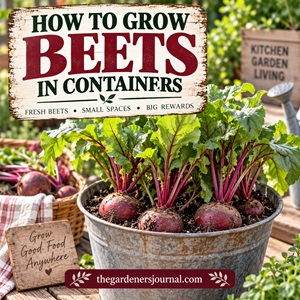
Beets are one of those vegetables that are surprisingly easy to grow in containers. You don’t need a large garden or a dedicated vegetable bed to grow a harvest of sweet, colorful beets.
This post may contain affiliate links.
Because beets are a cool-season crop, they’re especially nice for spring and fall container gardens. You can grow the roots for roasting, pickling, or canning, and the young greens are delicious too.
If you’re already growing carrots, bush beans, peas, cucumbers, zucchini, or tomatoes in containers, beets are a great vegetable to add to your small-space garden.
Choose the Right Container
Beets don’t need an enormous pot, but they do need enough depth for the roots to develop.
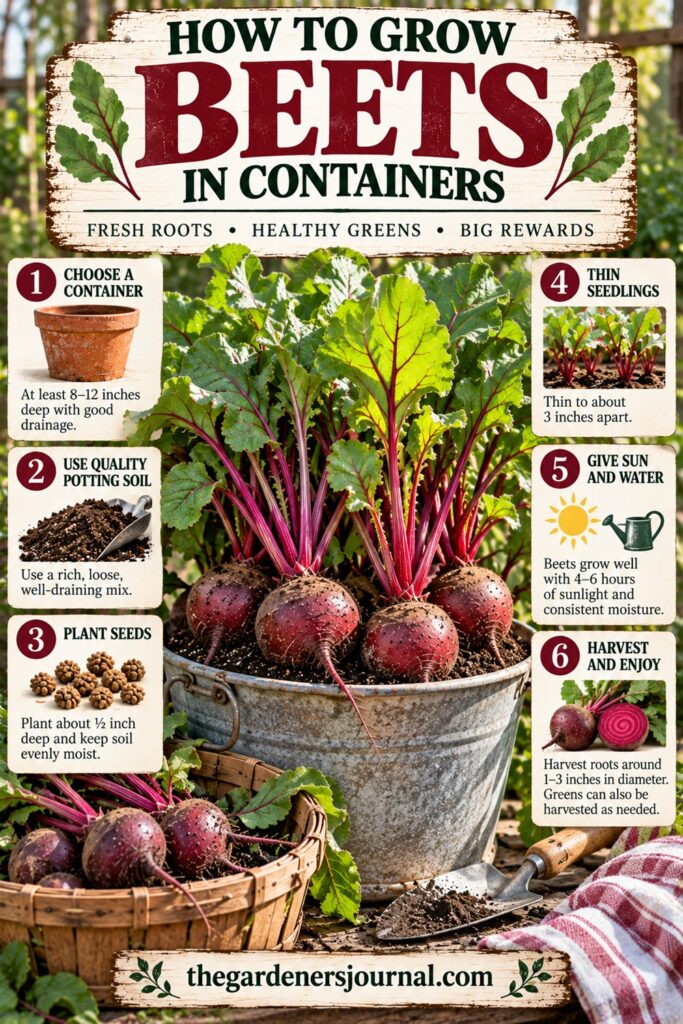
Choose a container that is at least 8–12 inches deep and has good drainage. A wider container, window box, or grow bag works especially well because you can grow several plants together.
Make sure there are drainage holes in the bottom. Beets need consistent moisture, but soggy soil can cause problems with root development and disease.
Use Good Potting Soil
Use a good-quality potting mix designed for containers rather than digging garden soil out of the ground.
Beets grow best in loose, fertile, well-drained soil. A little compost mixed into your potting mix can help provide nutrients while keeping the soil loose enough for the roots to develop.
The goal is soil that the beet root can easily grow through without hitting rocks, clumps, or compacted soil.
Plant Beet Seeds Directly
Beets are best started directly from seed in their container.
Plant the seeds about ½ inch deep and keep them evenly moist while they germinate.
Beet seeds are actually clusters containing several seeds, so don’t be surprised when several seedlings come up from one spot.
You can soak beet seeds in warm water for about 24 hours before planting to encourage germination, especially when planting in cool spring soil.
Thin the Seedlings
This is one step you don’t want to skip.
Once the seedlings are a couple of inches tall, thin them so the remaining plants have room to develop their roots.
Aim for about 3 inches between plants for full-size beets. You can harvest the tiny thinnings as baby greens instead of throwing them away.
Give Beets Plenty of Light
Beets can tolerate some partial shade, but they’ll grow well with several hours of direct sunlight each day. Around 4–6 hours of direct sun can work, although more light generally supports stronger growth.
One advantage of growing beets in containers is that you can move the container if you need to find a better location as the seasons change.
Keep the Soil Consistently Moist
Container soil dries out faster than garden soil, so keep an eye on your beets during warm or dry weather.
Water deeply when the soil begins to dry, rather than giving the plants a quick sprinkle every day. Consistent moisture is especially important while the roots are developing.
Try not to let the soil completely dry out and then soak it heavily. Fluctuating moisture can interfere with good root development.
Don’t Overcrowd Your Container
It’s tempting to plant as many seeds as possible in one pot, but overcrowding means the roots have to compete for moisture, nutrients, and growing space.
Give each beet enough room to form a nice round root. This is particularly important with container-grown root vegetables.
When to Harvest Beets
Beets can usually be harvested once the roots reach about 1–3 inches in diameter, depending on the variety and the size you prefer. Smaller beets tend to be especially tender.
You can also harvest some of the young greens while the roots continue growing. Just avoid removing all of the foliage from a plant at once.
For a continuous harvest, plant another container of beets every couple of weeks during the appropriate growing season. Succession planting can give you fresh beets over a longer period.
Best Beets to Grow in Containers
Look for varieties that produce smaller or round roots, particularly if your containers aren’t very deep. Some fun choices include:
- Detroit Dark Red
- Early Wonder
- Chioggia
- Golden
- Cylindra
- Little Ball
Cylindrical varieties can be especially useful if you want uniform slices for pickling or preserving.
Growing Beets in Containers Is Easier Than You Think
You don’t need a huge vegetable garden to grow beets. A sunny patio, deck, balcony, or even a few containers beside the back door can give you a surprising harvest.
And there’s something particularly satisfying about pulling a beet out of a container and discovering that beautiful jewel-colored root underneath the soil.
If you’re building a container garden this year, beets are definitely worth making room for.
More Vegetables to Grow in Containers
Once you discover how easy it can be to grow bush beans in containers, you may find yourself looking for more vegetables to add to your container garden.
Try growing:
- Carrots for a root crop that doesn’t need much space above ground
- Peas for an early-season container crop
- Cucumbers for a productive summer crop
- Zucchini in a large container
- Tomatoes for a classic container vegetable
- Lettuce and other greens for quick harvests
You can create a surprisingly productive vegetable garden with nothing more than a sunny patio and a collection of containers.
Follow my container gardening board on Pinterest.