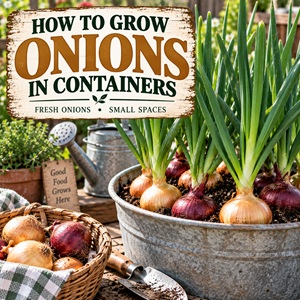
You don’t need a big vegetable garden to grow onions. In fact, onions are one of those vegetables that can be surprisingly productive in containers.
This post may contain affiliate links.
A sunny patio, deck, balcony, or even a few pots beside the back door can give you plenty of onions for cooking.
They also fit beautifully into a kitchen garden because you can grow them alongside other container vegetables like carrots, beets, peas, beans, cucumbers, zucchini, and tomatoes.
Here’s how to grow onions in containers successfully.
Choose the Right Container
Onions don’t need an extremely deep container, but they do appreciate plenty of room to spread out.
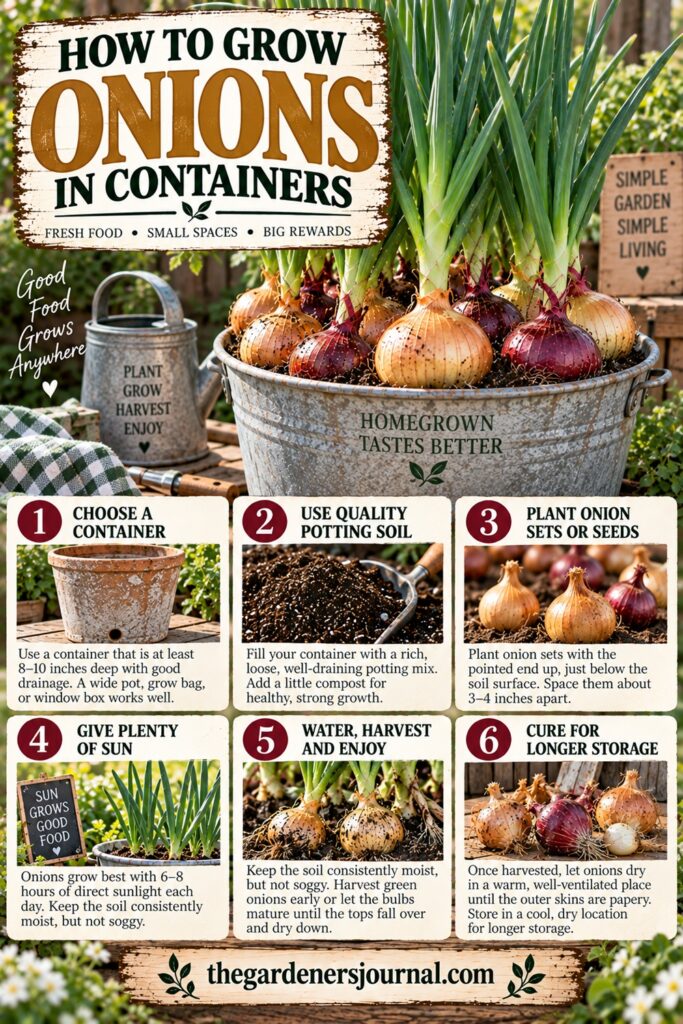
Choose a container that is at least 8–10 inches deep with good drainage. A wide planter, window box, grow bag, or large pot works well.
The wider the container, the more onions you can grow.
Make sure the container has drainage holes in the bottom. Onions don’t like sitting in soggy soil.
Use Good Potting Soil
Fill your container with a loose, fertile potting mix that drains well.
A good-quality container mix mixed with some compost gives onions the nutrients they need without making the soil too heavy.
Avoid using straight garden soil in containers because it can become compacted and restrict root growth.
Choose the Right Onion Variety
The type of onion you grow matters, particularly if you’re growing onions to produce large bulbs.
Onions are classified as short-day, intermediate-day, or long-day varieties based on how much daylight they need to begin forming bulbs.
Choose a variety suited to your growing region for the best results.
Some popular varieties include:
- Walla Walla – sweet and mild
- Candy – large, sweet onions
- Yellow Granex – mild and sweet
- Red Burgundy – beautiful red-purple bulbs
- White Lisbon – excellent for green onions
- Evergreen Hardy White – good for bunching onions
If you’re mainly interested in green onions, you have a little more flexibility and can harvest them much earlier.
Plant Onion Sets, Plants, or Seeds
You can grow onions from seeds, sets, or transplants.
For the easiest container garden, onion sets are particularly convenient. They’re small, immature onion bulbs that are already started and can be planted directly into your container.
Plant sets with the pointed end facing upward. The top of the bulb should be just below or barely at the soil surface.
If you’re growing from seed, sow the seeds according to the variety’s recommended planting depth and thin the seedlings as they grow.
Give Each Onion Room to Grow
Spacing depends somewhat on whether you’re growing onions for bulbs or green onions.
For full-size onions, give plants about 3–4 inches of space between them.
If you want smaller onions or green onions, you can plant them closer together.
One advantage of using a wide container is that you can arrange the onions in rows or a simple grid, making the most of your growing space.
Give Your Onions Plenty of Sun
Onions grow best in a sunny location.
Aim for 6–8 hours of direct sunlight each day.
Container gardening makes this especially easy because you can position your pots where they receive the most sun throughout the growing season.
Keep the Soil Moist
Onions have fairly shallow roots, so they don’t appreciate being allowed to completely dry out.
Keep the soil consistently moist but not soggy, particularly while the bulbs are developing.
Containers dry out more quickly than garden beds, so check your onions regularly during hot weather.
Water at the soil level rather than constantly wetting the foliage.
Feed Your Onions
Onions are relatively heavy feeders, particularly while they’re producing leaves and developing bulbs.
Start with nutrient-rich potting soil and compost, then provide a balanced vegetable fertilizer during the growing season according to the product directions.
Avoid going overboard with nitrogen late in the season. Too much nitrogen can encourage lots of leafy growth when you want the plant to put its energy into forming and maturing the bulb.
When to Harvest Green Onions
You don’t have to wait for your onions to form large bulbs.
Green onions can be harvested when the tops are young and tender. You can pull the entire plant or harvest them as needed, depending on the variety and how you planted them.
This is one of the easiest ways to enjoy fresh onions from a container garden.
When to Harvest Bulb Onions
For bulb onions, watch the foliage toward the end of the growing season.
When the tops begin to turn yellow, fall over, and dry down, the onions are approaching harvest time.
Once the bulbs are mature, gently loosen them from the soil and lift them out.
Try to harvest on a dry day if possible.
Cure Your Onions
If you want to store your onions, curing is an important step.
After harvesting, allow the onions to dry in a warm, dry, well-ventilated location. Keep them out of direct sunlight while the outer layers dry and become papery.
Once the necks and outer skins are thoroughly dry, brush off loose soil and trim the tops if desired.
Store cured onions somewhere cool, dry, and well ventilated.
Grow Onions for a Continuous Harvest
You can make the most of your containers by growing different types of onions for different purposes.
Plant some varieties for large storage bulbs, while using other containers for green onions that you can harvest throughout the season.
You can also stagger plantings of green onions so you always have a fresh supply.
Why Grow Onions in Containers?
Growing onions in containers is a great option when garden space is limited.
You can control the soil, move the containers to a sunnier location, and keep your onions close to the kitchen where they’re easy to harvest.
And there’s something satisfying about walking outside, pulling an onion from a pot, and bringing it straight into the kitchen.
If you’re building a small kitchen garden, onions are definitely worth giving a container of their own.
More Vegetables to Grow in Containers
Once you discover how easy it can be to grow bush beans in containers, you may find yourself looking for more vegetables to add to your container garden.
Try growing:
- Carrots for a root crop that doesn’t need much space above ground
- Peas for an early-season container crop
- Cucumbers for a productive summer crop
- Zucchini in a large container
- Tomatoes for a classic container vegetable
- Lettuce and other greens for quick harvests
Follow my container gardening board on Pinterest.