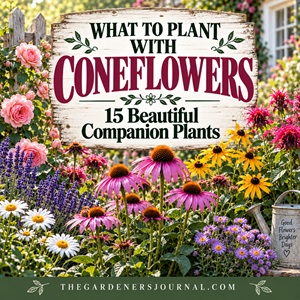
Coneflowers are one of those flowers that seem to belong in almost every cottage garden.
This post may contain affiliate links.
Their tall stems, daisy-like flowers, and long blooming season bring color to the garden while attracting bees, butterflies, and other pollinators.
But coneflowers don’t have to stand alone. Planting them with flowers that bloom at different times, grow at different heights, or have contrasting colors can make your garden feel fuller and more natural.
If you’re wondering what to plant with coneflowers, here are some of my favorite cottage garden companions.
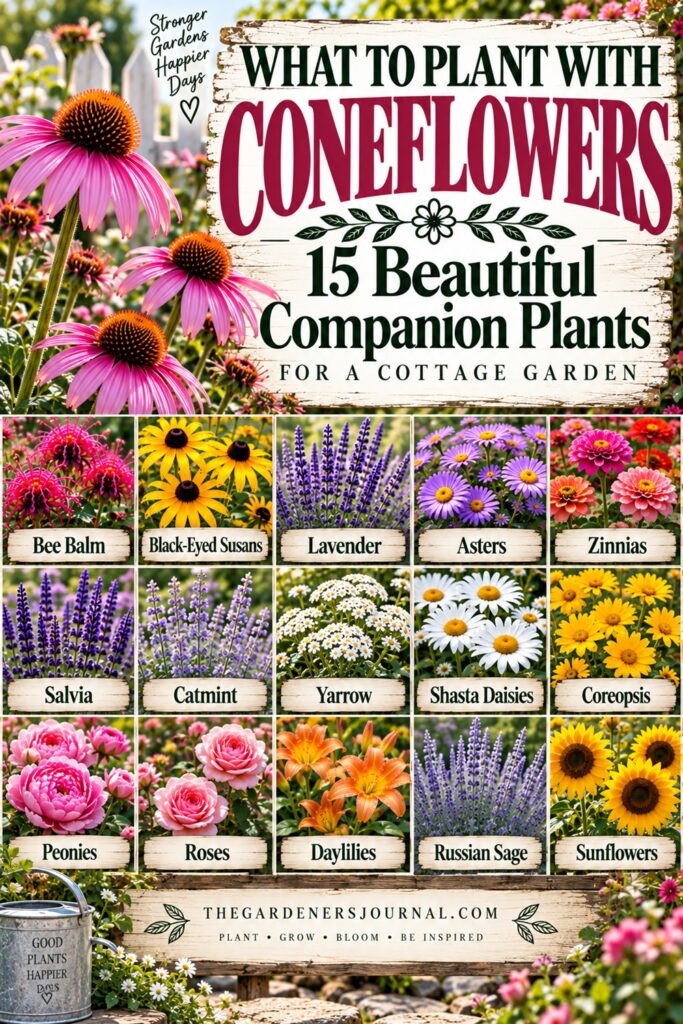
What Makes a Good Coneflower Companion Plant?
The best companions for coneflowers generally enjoy similar growing conditions. Coneflowers prefer full sun and well-drained soil, so look for plants that are comfortable in the same kind of garden.
I also like to think about:
- Height and shape
- Bloom time
- Flower color
- Pollinator appeal
- Whether the plants have similar water needs
- How they look together throughout the season
Rather than planting everything in neat rows, try grouping plants in drifts for a more relaxed cottage garden look.
1. Bee Balm
Bee balm and coneflowers are a natural combination for a pollinator garden. Bee balm adds tall, colorful flowers above the foliage and attracts bees, butterflies, and hummingbirds.
The two plants also look beautiful together, especially when you combine purple, pink, or red bee balm with purple coneflowers.
Related: How to Cut Back Bee Balm for More Blooms
2. Black-Eyed Susans
Black-eyed Susans are one of my favorite flowers to pair with coneflowers.
Their bright yellow flowers contrast beautifully with the pink, purple, and white shades of coneflowers, and both plants have that relaxed, cheerful cottage garden appearance.
They also bloom during much of the same part of the growing season, creating a beautiful summer display.
Related: How to Plant Black-Eyed Susans for a Gorgeous Cottage Garden
3. Lavender
Lavender brings something completely different to a bed of coneflowers.
Its silvery foliage and purple flower spikes provide a softer texture in front of taller flowers.
Lavender also attracts pollinators and prefers sunny, well-drained conditions, making it a practical choice for a sunny flower garden.
Related: Growing Lavender from Seed for a Cottage Garden
4. Asters
If you want your garden to keep blooming into fall, plant asters near your coneflowers.
Asters are important late-season pollinator plants and can provide nectar after many summer flowers have finished blooming.
The purple, pink, white, and blue flowers of asters also complement coneflowers beautifully.
Related: Everything You Need to Know About Growing Asters
5. Zinnias
Zinnias are another colorful annual that works beautifully with coneflowers.
Their bright flowers bring a completely different shape and texture to the garden, and they continue blooming for much of the summer.
Try planting taller zinnias behind or between groups of coneflowers rather than putting every flower in its own section.
Related: How to Save Zinnia Seeds for Next Year’s Garden
6. Salvia
Salvia’s upright flower spikes make a wonderful contrast to the round centers of coneflowers.
Purple salvia looks particularly pretty with pink or white coneflowers, while the vertical shape adds another layer of interest to the garden.
Salvia is also attractive to bees and hummingbirds.
7. Catmint
Catmint makes a lovely low-growing companion for taller coneflowers.
Its soft gray-green foliage and purple flowers can fill in the space around the base of taller plants without competing with them.
It’s especially pretty in a cottage garden where you want plants to spill naturally into one another.
8. Yarrow
Yarrow is an excellent choice if you want to add another flat-topped flower shape to the garden.
White, yellow, pink, and red varieties can all work beautifully with coneflowers. The airy flower heads help soften a planting filled with taller, upright flowers.
9. Shasta Daisies
Shasta daisies bring bright white flowers and yellow centers to the garden.
Their simple, classic appearance works especially well with coneflowers and other old-fashioned cottage garden flowers.
Plant them in groups for a fuller effect rather than scattering individual plants throughout the bed.
10. Coreopsis
Coreopsis brings cheerful yellow flowers to a coneflower planting.
Its smaller, lighter flowers create a nice contrast with the larger coneflower blooms, and the two can create a long-lasting summer display.
11. Russian Sage
Russian sage adds height, movement, and silvery foliage to the garden.
Its airy purple-blue flowers look beautiful growing behind or beside coneflowers. It also works particularly well in sunny, somewhat dry areas where you don’t want to constantly water your flower beds.
12. Daylilies
Daylilies are another easy-care perennial that can fill in around coneflowers.
Their long, strappy foliage adds a completely different texture, while the flowers provide additional color throughout summer.
Use shorter varieties toward the front of the bed and allow the coneflowers to rise above them.
13. Peonies
Peonies bloom earlier than coneflowers, which makes them useful when you’re planning a garden with flowers throughout the growing season.
Once the peonies finish blooming, the coneflowers can take over with their summer flowers.
Peonies, coneflowers, bee balm, lavender, asters, and other pollinator-friendly flowers can work together beautifully in a cottage-style garden.
Related: Best Peonies and Flowers for a Pollinator Garden
14. Roses
Roses and coneflowers are a classic cottage garden combination.
The structured form of a rose bush looks beautiful alongside the looser, more natural shape of coneflowers.
Try planting coneflowers around the base of roses to soften the edges of the bed and bring more pollinator-friendly flowers into the garden.
Related: How to Deadhead Roses Without Damaging Your Plant
15. Sunflowers
For a really cheerful summer garden, try combining coneflowers with sunflowers.
Sunflowers add height and drama while coneflowers fill the middle and lower layers of the planting.
Branching sunflower varieties can be particularly useful because they produce multiple flowers over a longer period.
Just be careful not to let the tallest sunflowers shade out your coneflowers.
Related: The Best Time to Plant Sunflowers in Your Garden
How to Arrange Coneflowers With Companion Plants
One of the easiest ways to design a coneflower garden is to think in layers.
Put the tallest plants toward the back, medium-height flowers in the middle, and shorter plants toward the front.
For example, you could plant:
Back: sunflowers, bee balm, roses
Middle: coneflowers, black-eyed Susans, asters, salvia
Front: lavender, catmint, yarrow, coreopsis
You don’t have to follow a strict formula. Cottage gardens look best when the plants have a little room to mingle.
Think About Bloom Time
One of the biggest advantages of companion planting is that you can keep your garden interesting for much longer.
Peonies can provide spring color, followed by lavender and roses. Coneflowers, bee balm, black-eyed Susans, salvia, and zinnias bring the garden into summer, while asters can keep the pollinators supplied with nectar into fall.
This is much more interesting than having the entire garden bloom for a few weeks and then fade.
Create a Pollinator-Friendly Cottage Garden
Coneflowers are already an excellent choice for a pollinator garden. Their nectar-rich flowers attract bees and butterflies, while the seed heads can provide food for birds later in the season.
Adding a variety of flowers gives pollinators more sources of food throughout the growing season.
Try combining coneflowers with bee balm, lavender, black-eyed Susans, asters, salvia, zinnias, and sunflowers for a colorful garden that’s beautiful to look at and useful to wildlife.
More Cottage Garden Flowers to Grow
If you love the relaxed look of a cottage garden, you might also enjoy:
- 25+ Cottage Garden Flowers for a Beautiful, Old-Fashioned Garden
- Best Peonies and Flowers for a Pollinator Garden
- Popular Aster Varieties for Cottage Gardens
- What to Plant With Lilacs for a Thriving Cottage Garden
- Best Companion Plants for Clematis
Coneflowers are beautiful on their own, but they really shine when they’re part of a garden filled with different colors, heights, textures, and bloom times.
Pair them with a few of these companion plants and you can create the kind of relaxed, overflowing flower garden that makes a cottage garden so special.
Follow my cottage garden flowers board on Pinterest.